Build Summer-Ready Strength with Smarter Tracking
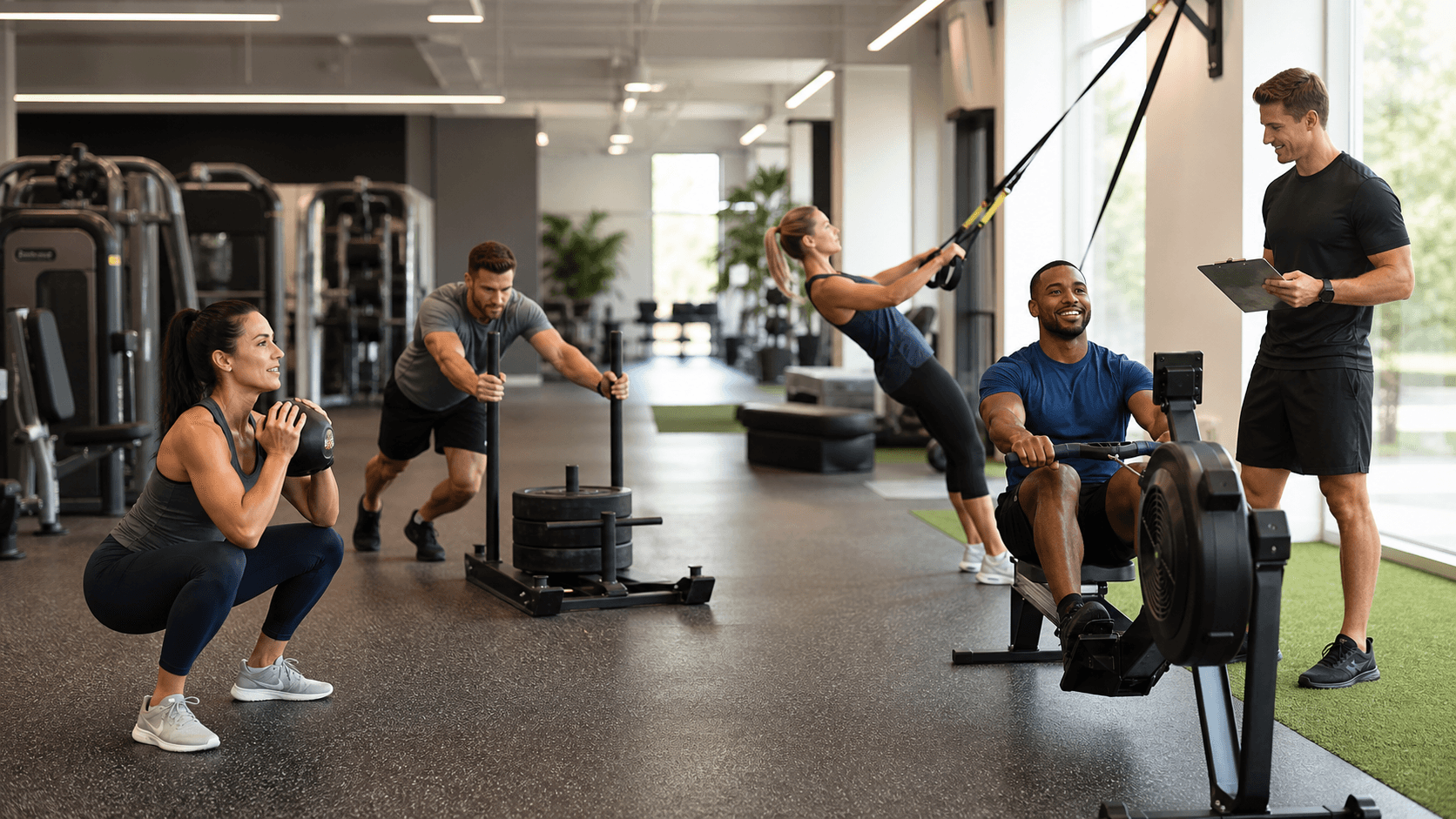
Getting stronger is not just about working harder; it is about working smarter. If you train in group personal training, it is easy to get caught up in the buzz of the room and assume you are making progress just because you are tired at the end. Tired is not a goal. Progress is.
What really moves the needle is simple: testing where you are now, tracking a few key numbers, and using those numbers to guide your next steps. When you do that, every session stops feeling random and starts feeling like a step toward a clear target.
In this article, we will walk through what to track in small group PT, how often to test, and how to turn those numbers into strength, fitness, and confidence that last long past summer.
Why Tracking Matters More in Small Group PT
Group personal training has a lot going for it. You get:
- Shared energy and support
- Professional coaching and form checks
- Planned programs instead of random workouts
- Accountability, because people notice when you show up
All of that is powerful. But there is also a quiet risk. In a group, it can be tempting to hide in the crowd. You go through the motions, you sweat, you chat, then you repeat it next week without really knowing if you are getting better.
Tracking is how you avoid that. When you know your own numbers, you take ownership inside a supportive setting. You are not just following along, you are training with a purpose that fits your body, your goals, and your schedule.
Clear data also helps your coach help you. When a coach knows your:
- Recent loads on main lifts
- Conditioning results
- Mobility limits or aches
they can adjust your program inside the small group. That might mean adding a little weight, changing tempo, swapping a movement, or dialing back for a stressful week. Tracking turns group PT into something that still feels personal.
There is also a big motivation piece. When life gets busy with travel, social plans, or school holidays, it is easy to think nothing is changing. Then you see that you added a few kilos to a lift, shaved some time off a bike test, or move better in a squat. That proof keeps you coming back.
Essential Baseline Tests for Strength, Fitness, and Mobility
Before you can track progress, you need a starting point. Baseline tests do not have to be scary or extreme. At a small group PT gym like ours in Chalfont St Giles, they are simple, coach-led, and scaled to you.
For strength, common tests include:
- Squat, such as goblet squat or barbell squat
- Hinge, such as deadlift or kettlebell deadlift
- Push, such as push ups or bench press
- Pull, such as dumbbell or cable rows
- Carry, such as farmer's carry for distance or time
For conditioning, we like repeatable, safe options:
- Timed intervals on a bike, rower, or ski machine
- Simple work-for-time tests, like a set number of calories or meters
- Short work and rest blocks to see how you recover between rounds
For mobility, we look at basic patterns:
- Overhead squat to check hips, knees, and shoulders
- Hip hinge to see back and hamstring control
- Shoulder reach to check overhead range
- Ankle range of motion that affects squats and lunges
These are not pass or fail tests. They are a snapshot. Beginners might use lighter weights or bodyweight versions. Older adults or people with injuries get even more scaled options, like box squats, incline push ups, or supported carries. Experienced lifters might test heavier lifts, slower tempos, or more complex patterns.
The key is timing. We like retesting every 6 to 8 weeks, not every session. That gap is long enough to see real change, but short enough to keep you focused. Week-to-week, numbers can bounce around with stress, sleep, or work. Over a training block, the trend tells the real story.
When you have baselines, every group session feels more purposeful. You know what you are working on and what you want to improve when you next test.
Simple Metrics That Make Group Personal Training Results Visible
Once those baselines are set, you do not need to track everything. A few simple metrics will show clear progress.
For strength, focus on:
- Load, how much weight you used
- Reps in reserve, how many solid reps you could still do at the end of a set
- Weekly volume, total work for a lift across sets and sessions
Writing down sets, reps, and weights in a small notebook or app is more than admin. It lets you see patterns, like a slow increase over weeks or a lift that has stalled and needs a tweak.
Technique matters just as much as load. Useful quality checks include:
- Tempo, how fast or slow you move the weight
- Range of motion, how deep or long you move in a pattern
- Form consistency, whether each rep looks similar
In group PT, coaches pay close attention to these details, not only how heavy or how fast you go. A lighter but cleaner rep is often more progress than a heavy, messy one.
For conditioning, helpful metrics are:
- Time to complete a set amount of work
- Heart rate recovery between sets, if you track it
- Sustainable pace on machines that you can repeat across rounds
Progress might show up as quicker times, but it can also look like lower effort at the same pace, less gasping between intervals, or better recovery between rounds.
Lifestyle metrics are softer, but still useful. Note things like:
- Daily energy levels
- Sleep quality and length
- Stress and soreness
These help your coach judge how hard you should push on any given day and when to adjust volume or intensity so you keep improving without burning out.
Turning Numbers Into Milestones That Keep You Training
Numbers are only helpful if they mean something to you. That is where milestones come in.
Short-term milestones over 2 to 4 weeks might be:
- Hitting your planned sessions each week
- Cleaning up your technique on key lifts
- Finishing sets with the right level of challenge
Medium-term goals over 6 to 12 weeks might include:
- Adding a set amount of weight to your squat or deadlift
- Doing more push ups or rows with good form
- Improving a bike or rower test by a small, realistic margin
Long-term milestones over 3 to 12 months often show in daily life:
- Moving without nagging aches
- Better posture when sitting or standing
- Feeling confident in sports, hikes, or active holidays
In a group PT setting, there are simple ways to celebrate these wins, such as:
- A shared shoutout at the end of a session
- A progress board or notes in your log
- Short check-ins with your coach every training block
Your goals can also shift with the seasons. Summer might be about staying consistent while life is busy. Autumn might lean into heavier strength work or body composition. The point is that your milestones match your lifestyle, any injuries, and what you actually care about.
Start Tracking Today and Make Every Session Count
You do not need a perfect system to start. At your next group personal training session, try this simple checklist:
- Bring a notebook or open a notes app
- Write down your main lifts, sets, reps, and weights
- Add one or two words on energy, sleep, and stress
- Choose one small milestone for the next 4 weeks
From there, you can build. Talk with your coach about baseline tests, retest dates, and which metrics fit your current phase. They can help you keep things simple so tracking feels like a tool, not a chore.
When you treat numbers as feedback, not judgment, they stop being scary. They become proof that your work in the gym is paying off, one small step at a time. Over a single 6 to 8 week training block, you might be surprised by how much stronger, fitter, and more capable you feel, both in the gym and in everyday life.
Take The Next Step Toward Stronger, Smarter Training
If you are ready for coaching that keeps you accountable and supported, our group personal training is built to help you train with purpose. At GDN Fitness, we tailor each session so you can progress safely while still feeling pushed in the best way. Have questions or want to see if our approach is a good fit for you? Reach out to us through contact us and we will help you map out your next move.