Build Everyday Power That Lasts All Year
Strength training is not only about big lifts or chasing a certain look; it is about making day-to-day life feel easier. Carrying shopping, playing with children, walking up hills in the Chilterns, even getting up from the sofa, all feel better when your body is strong, stable and confident.
Autumn is a natural reset. Routines settle back in after summer, work gets busy, and social plans build up as the year moves on. This is a great time to build the kind of strength that supports your work, family and hobbies, instead of draining you.
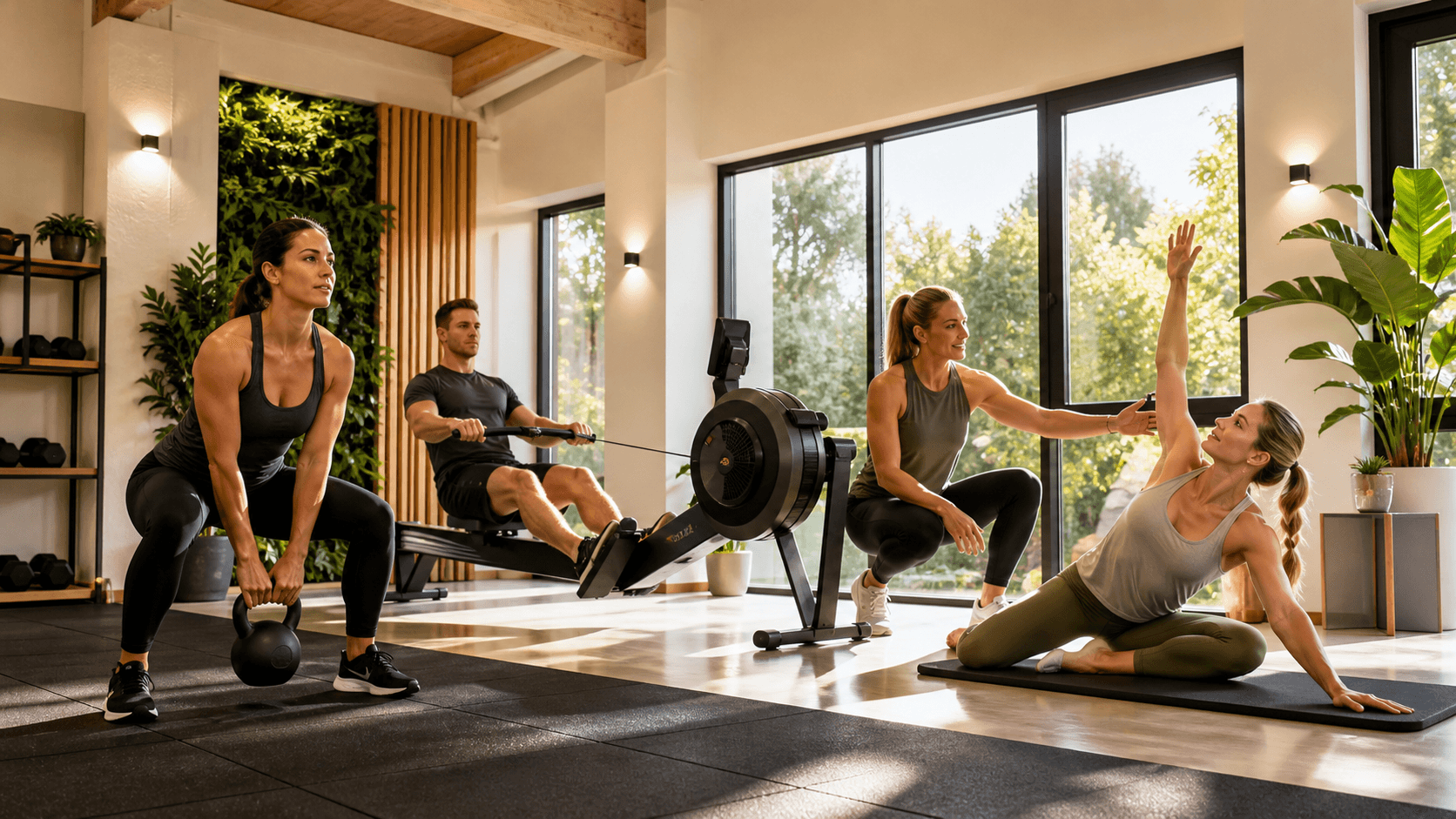
Most of what you do in daily life comes back to six movement patterns: carry, hinge, squat, push, pull and rotate. Train these well, and everything from lifting luggage to gardening feels smoother and safer. At our resistance training gym, we use these patterns as the base of our small-group sessions so people of different levels can progress together.
In the next sections, we will break down each pattern, show how it shows up in real life, and explain how a well coached small-group setting can move you from cautious beginner to confident lifter in a structured, safe way.
Why Movement Patterns Beat Random Workouts
Movement pattern-based training means we coach the way your body is designed to move, rather than just hopping between random machines or copying social media workouts. Instead of thinking in terms of "chest day" or "arm day", we ask, are you training your hinges, squats, pushes, pulls, carries and rotations this week?
This type of training helps your joints, posture and confidence because it respects how your body connects from head to toe. You are not just working isolated muscles, you are building whole body strength that transfers straight into life outside the gym.
A pattern focus is also very clear to track. As the weeks pass, you notice that:
- Your squats feel smoother and deeper
- Your carries feel steadier and less wobbly
- Your hinges feel stronger through your hips, not your lower back
- Your pushes and pulls feel more controlled, not shaky
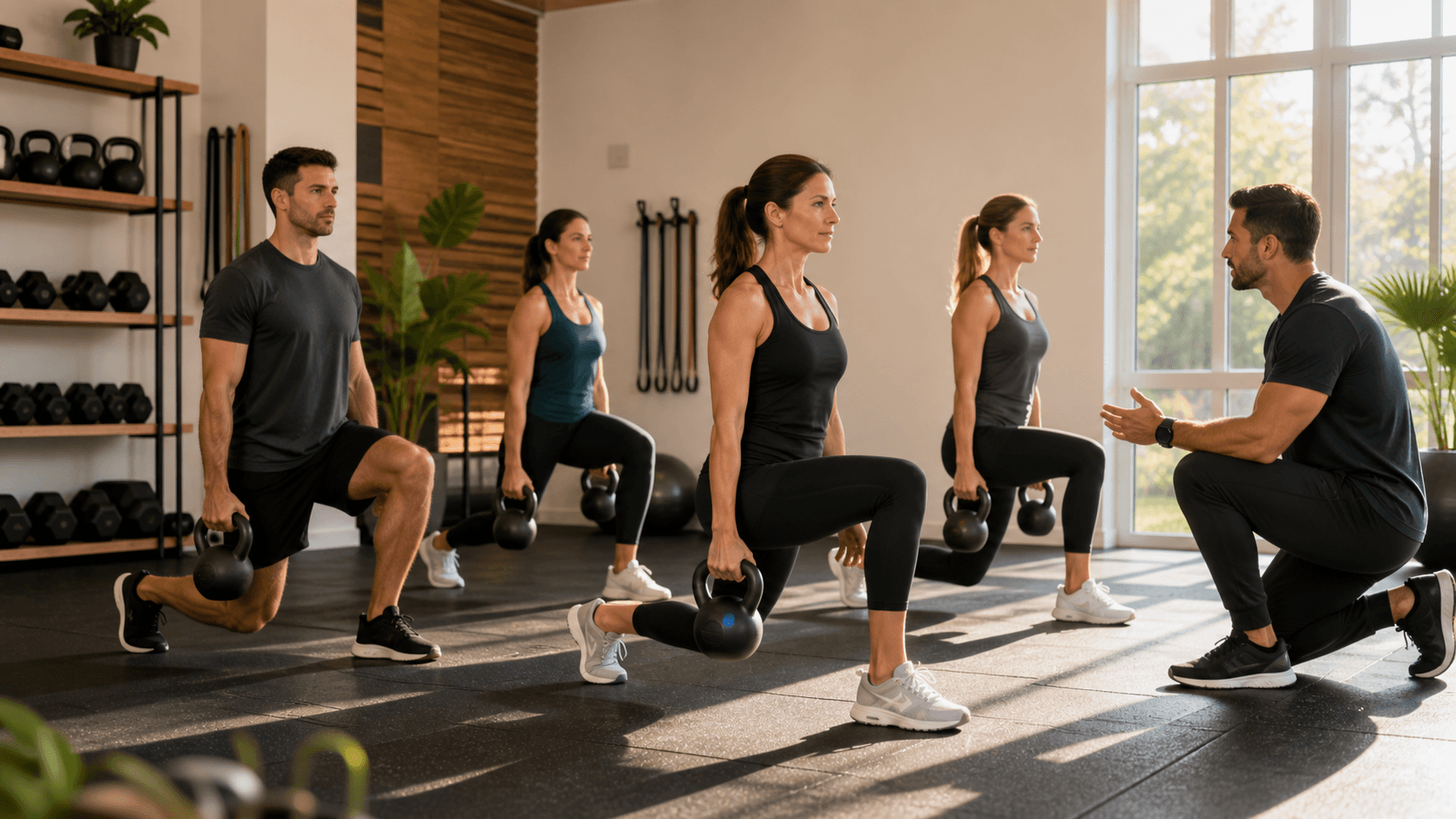
At GDN Fitness in Chalfont St Giles, our small-group strength and conditioning sessions are built around these six patterns. In the same session, one person might be working a lighter goblet squat while another tackles a heavier safety bar squat, yet both are improving the same pattern with coaching on load, tempo and range of motion.
This approach suits long-term goals. Instead of chasing a quick fix before the holidays, you build the ability to lift, carry, climb and twist well into later life.
Carry, Hinge, Squat for Daily Strength
Carry, hinge and squat sit at the base of almost everything you do.
Carries show up when you pick up shopping bags, hold a child on your hip or drag a suitcase through an airport. In the gym, we might use:
- Farmer's carries with weights in both hands
- Suitcase carries with a single weight on one side
- Front carries where the load sits against your chest
We can progress these with more distance, more weight, different grips and single arm versions that challenge your core and posture.
The hinge is your pattern for picking things up from the floor or loading the car. It is all about moving from the hips, not rounding the back. Progressions can look like:
- Learning the hip hinge with a dowel along your spine
- Moving to kettlebell deadlifts from a raised block
- Building up to trap bar deadlifts and then kettlebell swings
We adjust tempo, for example slow on the way down, to teach control before adding more load.
Squats are your pattern for getting up from chairs, sofas and the floor. In a small group, we often start with:
- Box squats to a set height
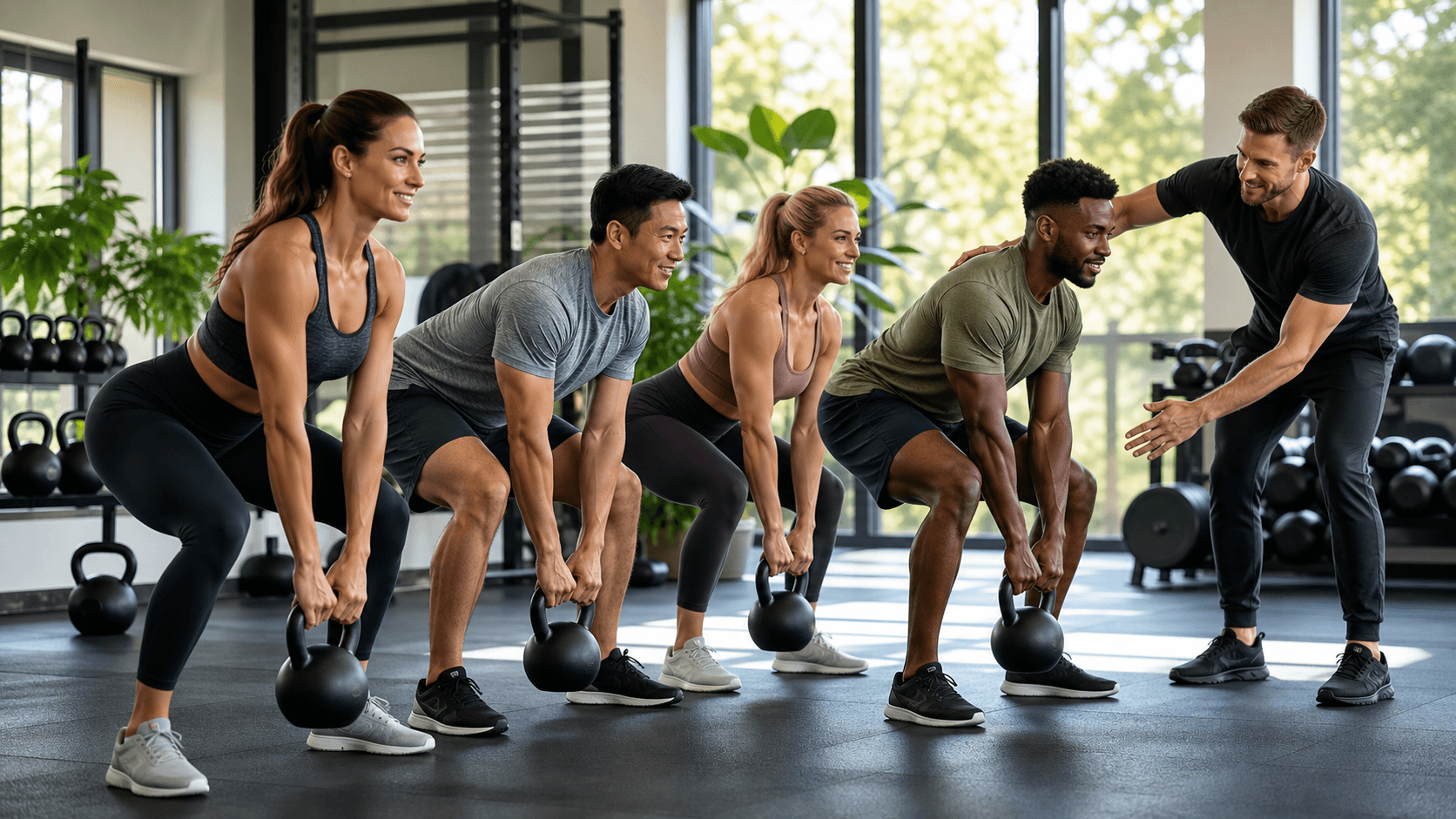
- Goblet squats with a kettlebell or dumbbell
- Then front or safety bar squats for those who are ready
We can change stance width, squat depth, heel elevation and support to match your mobility. Throughout all three patterns, a good resistance training gym will keep a close eye on spine position and breathing. We increase load gradually so your knees, hips and back grow stronger without getting annoyed.
Push, Pull, Rotate for Upper Body Control
Push, pull and rotate round out your movement toolkit.
Push patterns show up when you open heavy doors, push a pram, or press yourself up from the floor. In small groups, we like to build this from:
- Incline press-ups on a bar or bench
- Floor presses with dumbbells
- Bench presses with a bar or dumbbells
- Overhead pressing when shoulders are ready
Pull patterns appear when you open doors towards you, pull yourself up a step, or row a boat. In the gym, that can be:
- Dumbbell or cable rows
- Chest-supported rows for extra back support
- Assisted pull ups with bands or machines
We progress pull work with tempo, single arm variations, different grips and gradually less assistance.
Rotation is often missed, yet you twist when you drive, turn quickly to catch something or swing in many sports. We usually start with anti-rotation drills, like a Pallof press, to teach your core to resist unwanted movement. Then we add:
- Standing cable or band rotations
- Medicine ball throws to a wall for power
In a small group setting, coaches are close enough to watch your shoulder and spine alignment on each rep. We can tweak angles, adjust the bench height or bring in a different grip so you build strength without aggravating the neck, elbows or lower back.
How Small-Group Training Progresses Each Pattern
Good progress is not just about "more weight every week". There are several levers we can use:
- Load, how much weight you lift
- Volume, how many sets and reps you do
- Range of motion, how deep or far you move
- Tempo, how fast or slow each phase of the lift is
- Stability, for example two legs versus one, or two arms versus one
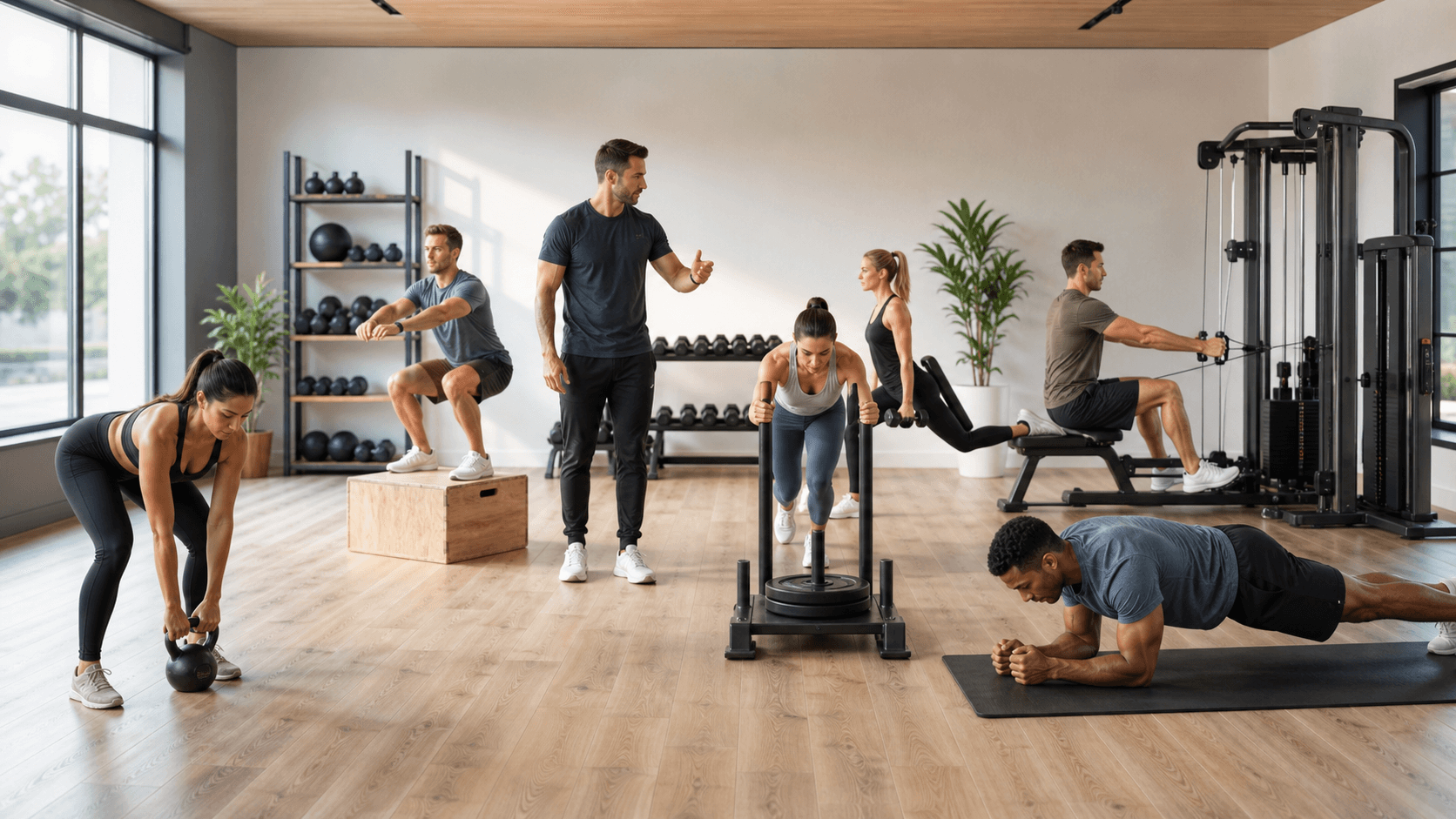
In our small-group sessions, a typical flow might be: a warm-up tailored to your body, one main lift focused on a key pattern, accessory work that covers the other patterns, then a conditioning section that keeps your heart rate up and your technique sharp.
Mixed abilities fit in the same session because we can scale each element. A newer lifter might squat to a box with light weights, while a more advanced person uses a safety bar, adds a pause at the bottom or works single leg. The movement pattern is shared, but the challenge is personal.
We also think about training over the seasons. As the weather turns colder and darker, recovery can feel harder, so we lean into smarter progress instead of constant pushing. Built-in lighter weeks give joints and tendons a chance to settle, which helps you keep showing up, instead of swinging between all-in and completely off.
Turn Autumn Intentions Into Real-World Strength
A simple way to start is to pick one pattern that feels hardest in daily life and focus on it for the next couple of months. Maybe getting off the floor feels slow, carrying shopping feels harder than it should, or long hours at a desk leave your back stiff when you stand up.
Set two or three clear goals around that pattern, such as standing up from a lower chair without using your hands, carrying heavier bags comfortably from the car, or bending to the floor and back without your back tightening. Work these goals into a structured plan that covers all six patterns so your whole body develops together.
At GDN Fitness, we see strength as a lifestyle support tool. Stronger carries make school runs feel easier. Better hinges make gardening and DIY less tiring. More controlled pushes, pulls and rotations make hobbies and walks more enjoyable, especially when the weather is colder and pavements are damp and uneven.
With a pattern-based approach, regular visits to a resistance training gym stop feeling like a chore and start feeling like real everyday power. You are not just getting through your week, you are moving through it with more strength, confidence and ease.
Start Building Strength And Confidence With Expert Guidance Today
If you are ready to improve your strength and feel more in control of your fitness, our resistance training gym is designed to support you at every stage. At GDN Fitness we create tailored programmes so you can progress safely and see consistent results. Speak to our team to discuss your goals and any concerns, or book a first session through our contact page.