Build Bulletproof Strength That Lasts All Summer
Strong for summer should mean more than a quick six-pack. It should mean you can lift your suitcase into the car, play games in the park, or spend a whole day on your feet without worrying about a sore back. That kind of strength comes from a plan, not random workouts.
At GDN Fitness, our small group personal training is built around that idea. We focus on strength that holds up in real life, not just in the gym. We use progressive overload, smart mobility work, and planned recovery so your body can handle more stress without breaking down.
Resilient strength means:
- Your joints handle load without constant niggles
- Your muscles support your daily movement, not just big lifts
- Your energy keeps up with a busier social and family calendar
Below, we break down what resilient strength really is, how small group personal training supports it, and a simple 6 to 8 week framework you can use as a roadmap.
What Resilient Strength Really Means for Your Body
Being gym-strong is hitting big numbers on a barbell. Being life-strong is carrying shopping bags up stairs, crouching to play with kids, and getting up from the floor easily. You need both strength and smooth movement to feel good day to day.
We like to think of resilience in three pillars:
- Load tolerance: Your muscles, tendons, and joints can handle more weight, more steps, and more active days without flaring up.
- Movement quality: Your squats, hinges, pushes, pulls, and carries are clean, so stress spreads across the right areas instead of jamming one spot.
- Capacity: You have enough strength and conditioning to get through a long, active week without feeling wiped out.
Many people arrive with similar habits and issues. Long desk hours often mean tight hips. Lots of driving can leave the upper back stiff. Lack of regular training can lead to sleepy glutes and a soft core. When these stack up, even simple things like gardening or a long walk can trigger low back, knee, or shoulder pain.
With structured programming, we work through that step by step. We build better patterns, slowly increase load, and give your body time to adapt, so you can do more in and out of the gym.
How Small Group Personal Training Protects You From Injury
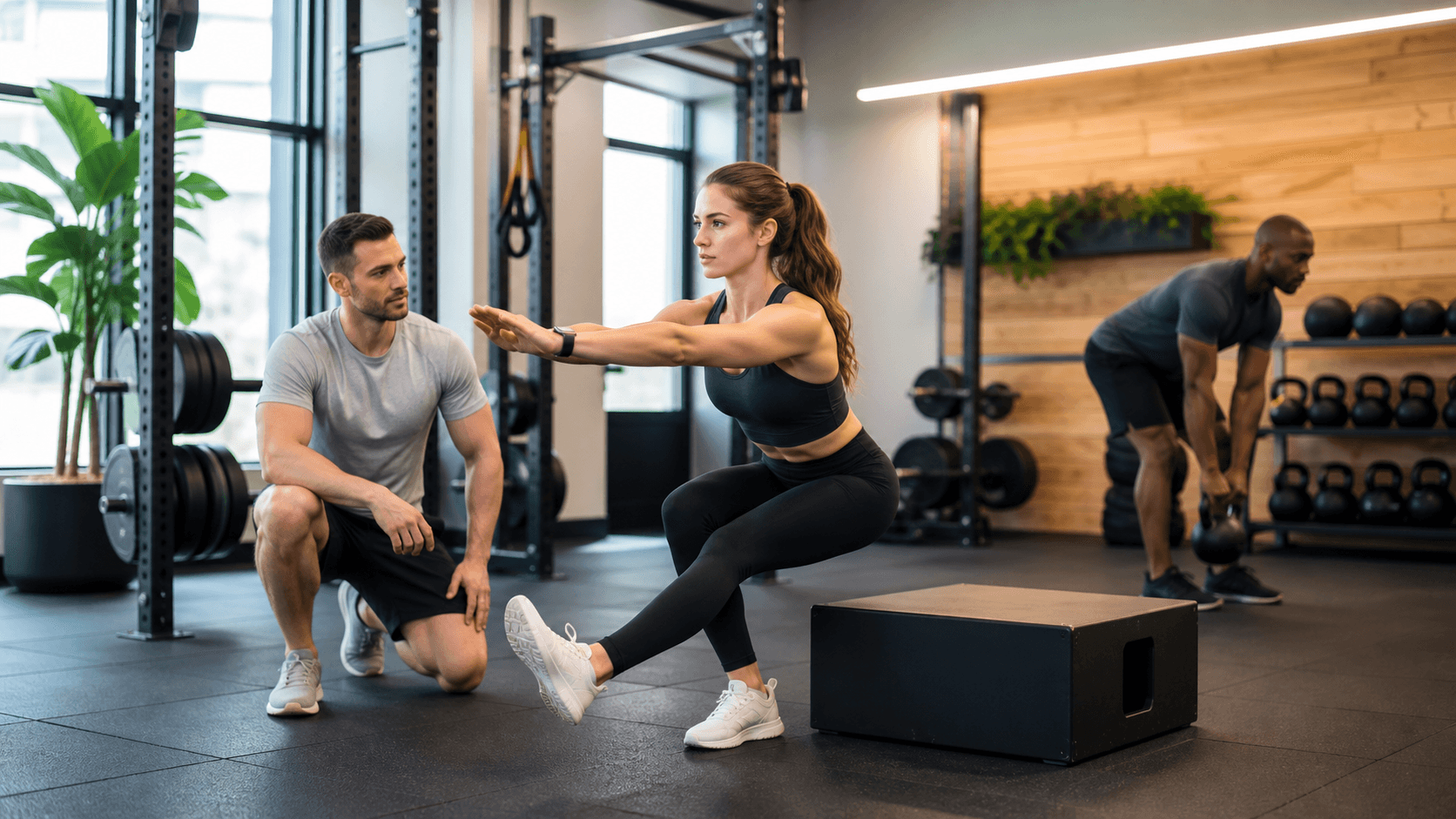
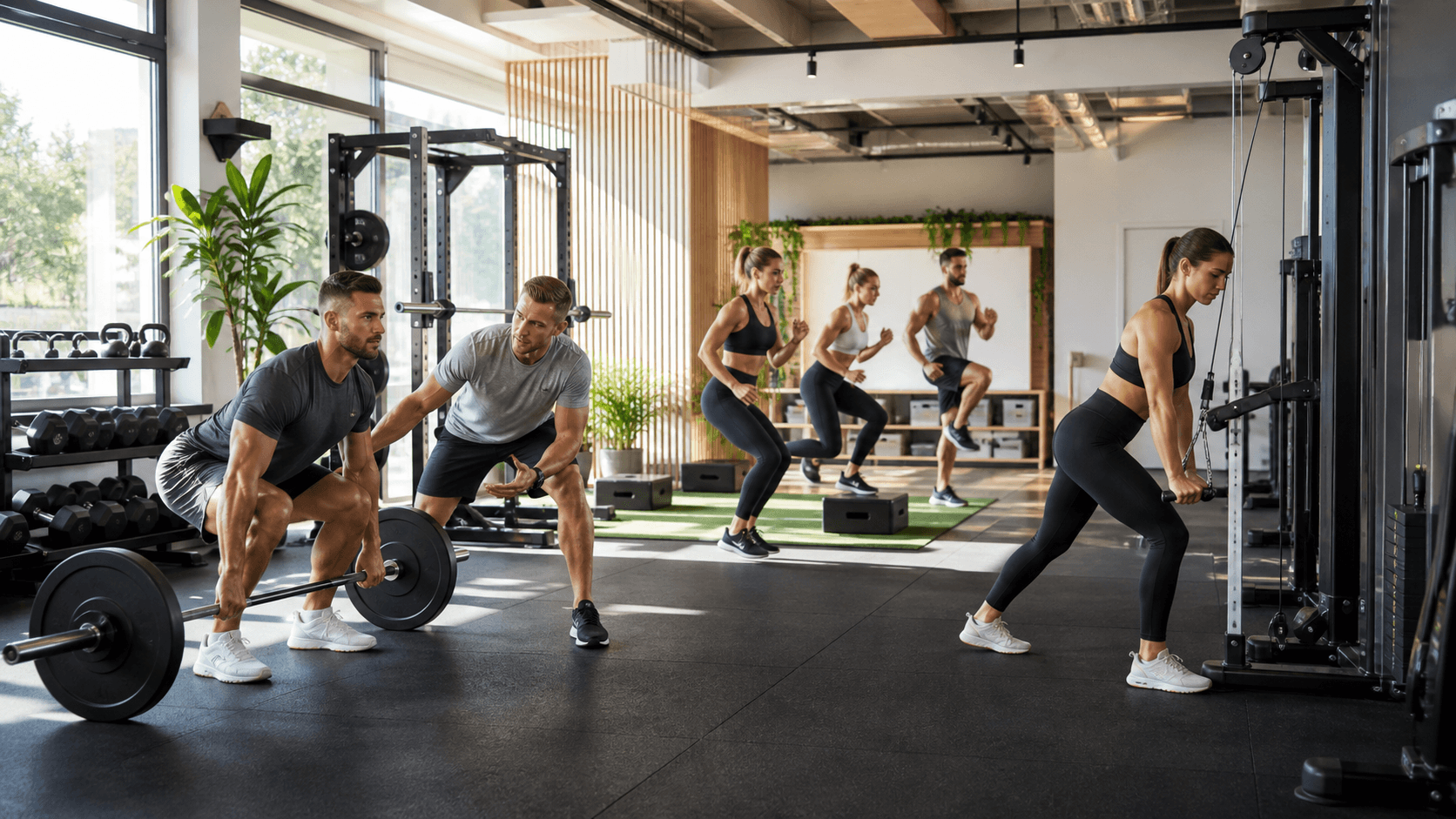
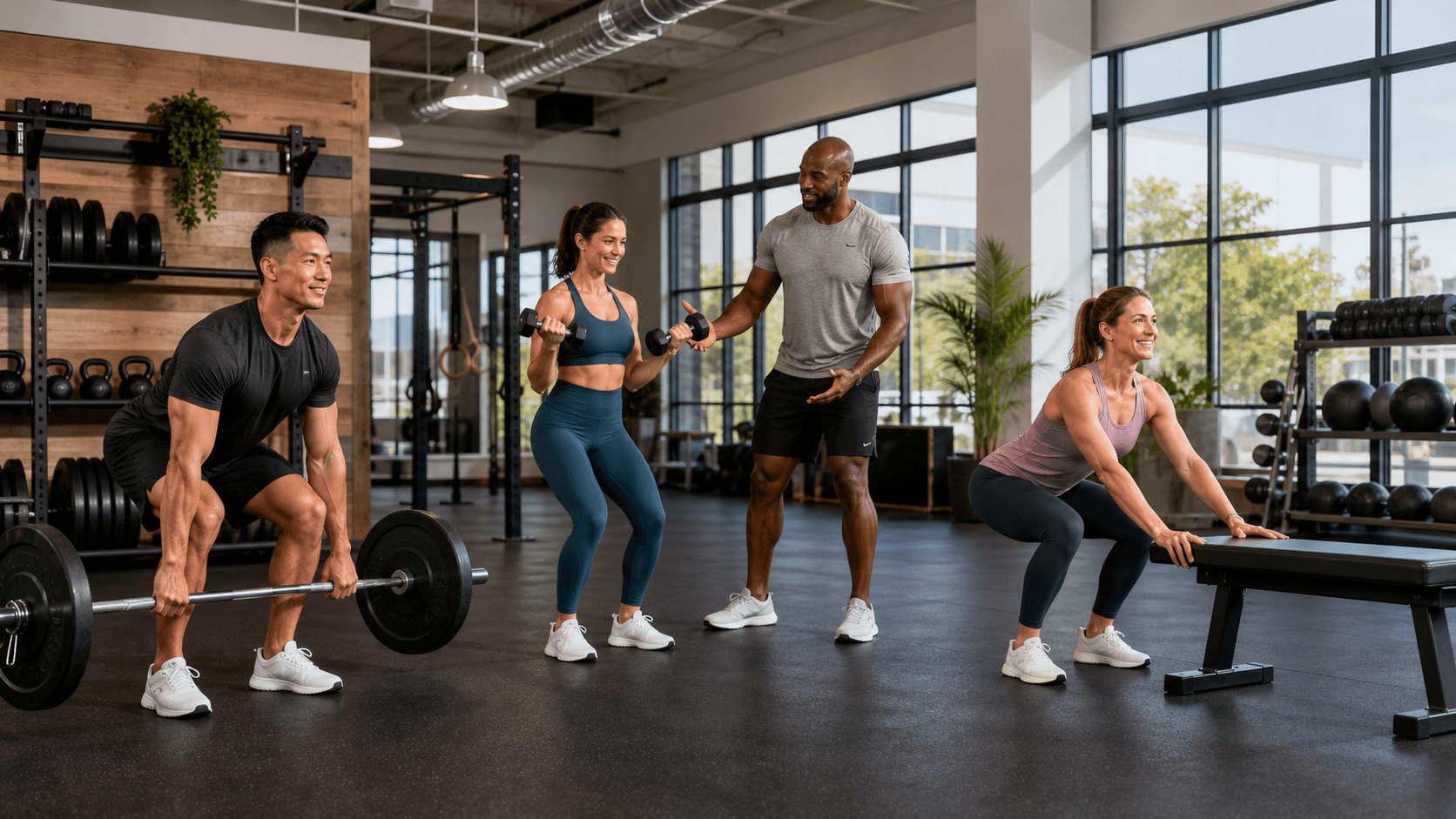
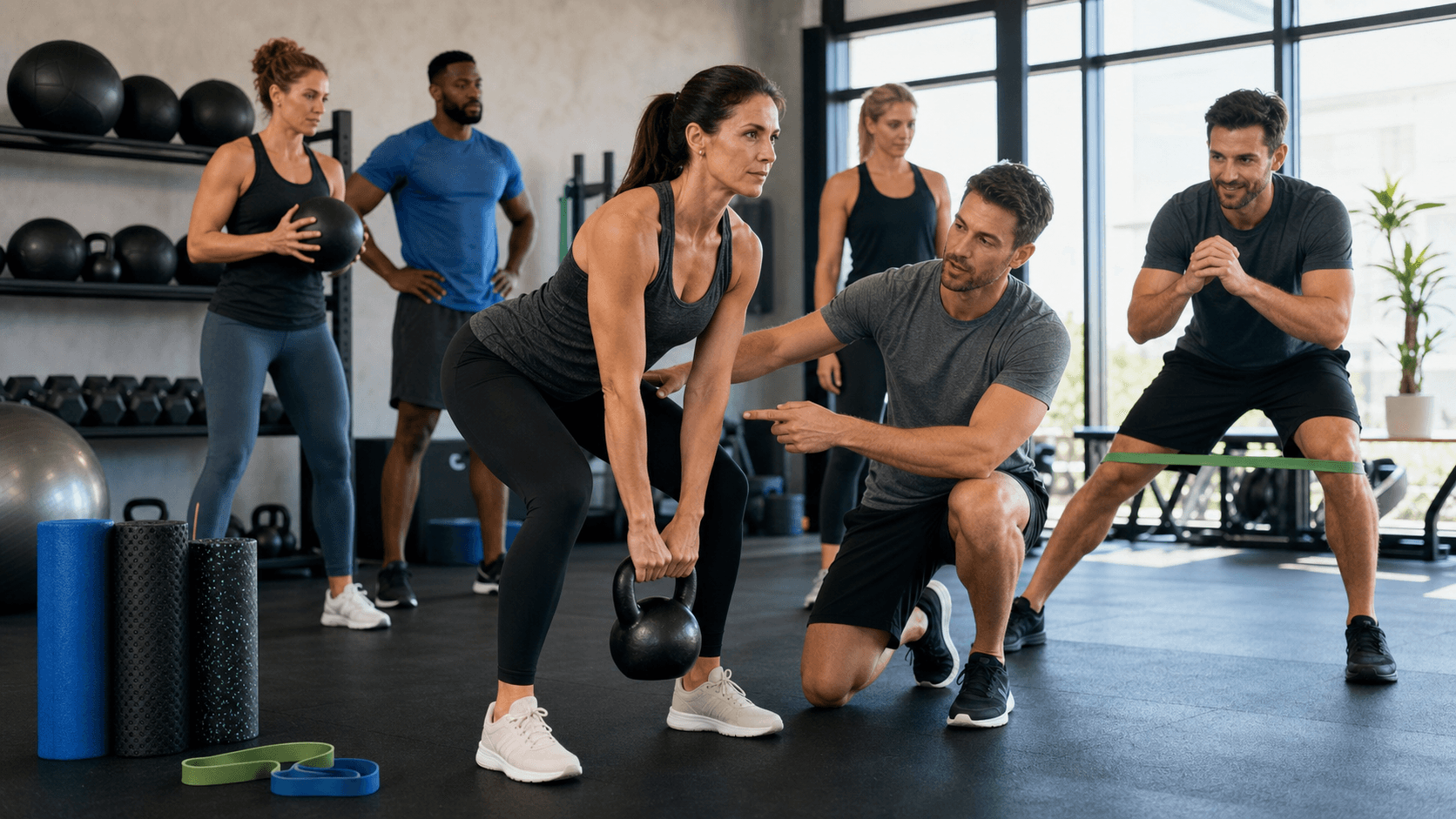
Small group personal training sits between 1 to 1 coaching and big group classes. You share the room and energy with others, but still get hands-on coaching. That balance is powerful for staying safe and progressing.
In our sessions, everyone follows the same framework, but the details are personal:
- Loads are chosen for your current strength, not the person next to you
- Exercises are tweaked up or down, based on your experience and body
- Mobility and activation drills are picked to match your tight spots and weak links
This does a few important things for injury prevention:
- Coaches give live feedback, so poor form does not become your default
- Progressions are planned, so volume and intensity do not spike right before holidays
- Warm-ups are not rushed, and rest days are built in, so you recover properly
The lifestyle side also matters. In a relaxed, friendly space, you are more likely to keep showing up. Consistent training is what builds real resilience, not a few hard weeks followed by a layoff when something hurts.
The Three Engines of Resilience: Overload, Mobility, Recovery
To build an injury-resistant body, three engines work together.
- Progressive overload
Your body gets stronger when you ask it to do a little more over time. That might look like:
- Adding a small amount of weight to your main lifts
- Adding a set or a couple of reps to a movement
- Slowing the tempo for more control and time under tension
- Progressing from bilateral to single-leg or single-arm work
Done well, this teaches muscles, tendons, and ligaments to handle more stress safely. Random spikes, like suddenly doubling your sessions or pushing to failure every workout, tend to cause issues. Progression should feel steady, not dramatic.
- Mobility and movement quality
Targeted mobility helps your joints move the way they are meant to, which protects them, under load. At GDN Fitness, warm-ups are not just a few arm circles. They often include:
- Dynamic hip and ankle mobility drills
- Upper back and shoulder opening work
- Glute and core activation exercises
- Light pattern practice for squats, hinges, and lunges
This sets you up to move better in the key lifts, so strength goes into the right muscles instead of grinding into your joints.
- Recovery as a training skill
Recovery is where your body adapts. Without it, even the best program will feel like a grind. We encourage members to:
- Make sleep a priority where possible
- Keep a handle on life stress and adjust training when needed
- Use active recovery, like easy walks or gentle cycling on rest days
Small group personal training helps keep intensity in the right zone. We can push harder when you feel good and pull back when work, kids, or travel ramp up.
Your 6, 8 Week Resilience-Building Training Framework
Here is a simple structure you can follow as a focused resilience block leading into a busier season.
Duration: 6 to 8 weeks
Frequency: 2 to 3 small group personal training sessions per week
Weekly flow:
- One lower body strength emphasis
- One upper body strength emphasis
- One full-body or conditioning emphasis
Weeks 1, 2: Foundation
Focus on:
- Technique first, load second
- Controlled tempo, like 3 seconds down, 1 second up
- Mobility in the warm-up for hips, ankles, upper back, and shoulders
Key movements:
- Goblet squats
- Hip hinge patterns like Romanian deadlifts with light weights
- Row variations
- Carries, like farmer's walks
- Push-up variations and basic core bracing
Weeks 3, 4: Progress
Now we gradually increase the challenge:
- Slightly heavier loads or extra sets
- A bit more total work per session
- Conditioning blocks that feel like real life: carries, sled work, step-ups
Exercises might include:
- Front-loaded squats
- Romanian deadlifts with more load
- Single-arm presses
- Slightly longer conditioning circuits with clean form
Weeks 5, 6: Consolidate
We keep the higher loads but slightly trim volume to allow adaptation.
- More unilateral work like split squats and single-leg hinges
- Power elements, such as controlled kettlebell swings or medicine ball throws
- Extra focus on recovery routines and breathing drills at the end of sessions
Optional Weeks 7, 8: Peak and Deload
Week 7:
- A small push in performance, like heavier sets on your main lifts
- No ugly reps, still technically clean and smooth
Week 8:
- Drop volume and intensity
- Extra mobility and easy conditioning
- Goal is to feel fresh, not exhausted, as your calendar gets busier
Making This Framework Work for Real Life
Life does not pause for training blocks. Work trips, school events, and holidays happen, so the plan has to bend without breaking.
In a small-group personal training setting, we can adjust this framework around:
- Travel weeks, by reducing frequency or shortening sessions
- Existing aches, by swapping or modifying specific exercises
- Returns from injury, by slowing progression and using more supported patterns
We also teach simple self-checks so you know when to push and when to hold:
- Good to progress: no lingering joint pain, steady sleep, solid form even when a bit tired
- Time to hold or regress: nagging soreness, technique breaking down, high stress or poor sleep
A few scheduling tips:
- Aim for 2 to 3 sessions spread across the week with at least one rest day between heavy strength days
- If life stress is high, swap one strength day for a low-intensity walk or mobility session
- In very busy weeks, keep a minimum effective dose: one full-body strength session plus light movement on other days
Training for resilience means planning for real life, not waiting for a perfect week that never comes.
Start Training for the Summer You Want to Enjoy
Resilient strength is really about freedom. It is being able to say yes to a long walk, a day trip, or a last-minute game in the park without wondering how your back, knees, or shoulders will cope. When you are strong, mobile, and recovered, you trust your body.
If you pick a 6 to 8 week window and stick to a simple structure like the one above, small group personal training can turn regular sessions into long-lasting, injury-resistant strength. At GDN Fitness in Chalfont St Giles, we focus on that relaxed, high-performance feel so training fits your life and supports the summer you actually want to enjoy, not just the way you want to look.
Transform Your Workouts With Focused, Supportive Coaching
If you are ready to train with expert guidance in a motivating, small-group setting, our small group personal training sessions are built to help you progress with confidence. At GDN Fitness, we tailor coaching, accountability, and programming so you are never left guessing what to do next. Tell us about your goals and schedule, and we will recommend the best path to get you moving. Have questions before you start? Just contact us so we can help you take the next step.