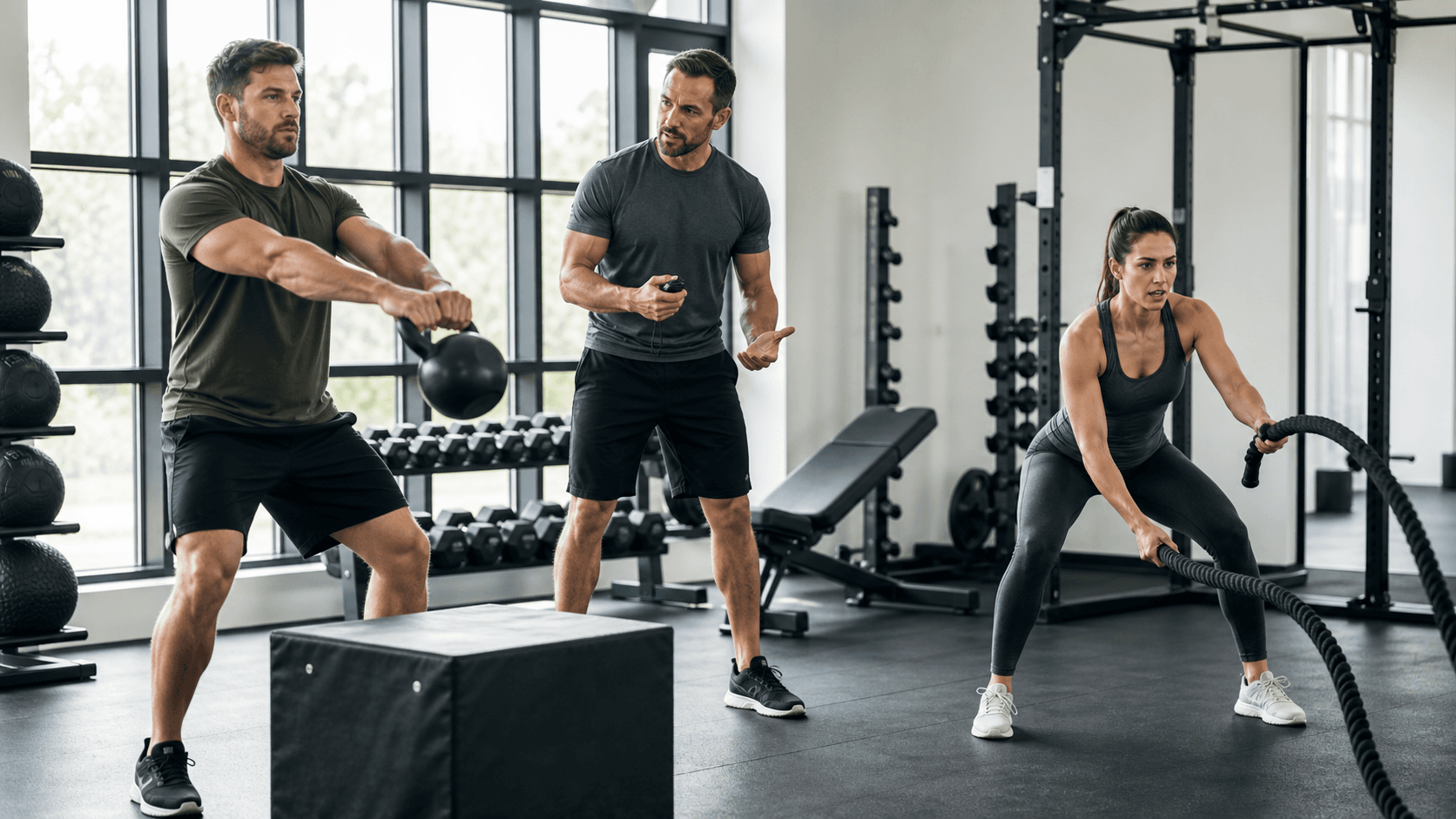
From Quick Fix HIIT to Lasting Fitness Lifestyle
HIIT workout classes are everywhere right now. They promise fast results, big calorie burn, and that "I've worked so hard" feeling in under an hour. When summer plans, weddings, and holidays are coming up, it is easy to jump into as many classes as you can and hope for a quick fix.
The problem is that a quick fix does not usually last. Training hard for a few weeks, then dropping off when life gets busy, keeps you stuck in the same pattern year after year. At GDN Fitness, we care more about the body and lifestyle you keep all year, not just how you look for one event. We use intensity in a smart way, not as punishment, and we want your training to support your health, confidence, and performance long-term.
In this article, we will show you how to turn your love of HIIT workout classes into a training style you can actually keep up. You will learn what often goes wrong, how to balance your week, and how a lifestyle-focused plan can still give you that HIIT buzz without burning you out.
Why Traditional HIIT Classes Often Fail You by Autumn
Many people go from doing very little to doing four or five intense classes a week. At first, the energy feels great. Then, after a few weeks, things start to slide. You may feel drained, small aches pop up, and your motivation fades once summer events pass.
A big reason is the "all or nothing" trap. Too much, too soon, with no plan to pull back. Traditional HIIT workout classes also have some common problems:
- Generic workouts that are the same for everyone
- No clear progression from week to week
- Limited coaching on form, especially when classes are busy
- A focus on sweat and exhaustion as the only sign of success
When every session is about going harder, something has to give. Often it is your sleep, your energy at work, or your joints. Add late nights, hot weather, and social events, and your body is dealing with stress from all sides. Without enough recovery, those "beast mode" weeks are hard to repeat once September hits.
This does not mean HIIT itself is bad. It means it needs to fit into a bigger training picture, instead of being your only tool.
The Lifestyle Training Upgrade to Your HIIT Habit
To make HIIT work long term, we need to change the goal. Instead of chasing the highest calorie burn, think about building a body that:
- Feels strong and capable
- Moves well, with good mobility
- Handles busy workdays and family life without constant fatigue
That kind of body comes from balance. Strength training builds muscle and joint support. Conditioning work improves heart health without always pushing to the limit. Mobility keeps your hips, shoulders, and spine moving well so you can train and live without constant tightness.
HIIT then becomes one tool inside this mix, not the whole thing. Short bursts of higher intensity can sit on top of a base of strength, control, and movement quality. This is where individual coaching matters. At a private studio like ours in Chalfont St Giles, we can:
- Adjust exercise choices around your body and history
- Change intensity from session to session based on how you feel
- Progress you over time so you keep improving, not just repeating
The aim is simple: your training should support your lifestyle, not fight against it.
Smarter Ways to Use HIIT Workout Classes All Year
You do not have to give up HIIT to be more sustainable. You just need a smarter weekly structure. For many people, a balanced summer week might look like:
- 1 to 2 HIIT workout classes
- 2 strength-focused sessions
- 1 day of low-intensity cardio or dedicated mobility work
- 1 to 2 full rest or light movement days
When life gets busy, like in autumn or winter, you can dial HIIT down to once a week and keep your strength and movement habits steady. This way, you still get the buzz and fitness benefits of HIIT without relying on it for everything.
Learning to listen to your body is key. Useful signs to watch include:
- Energy levels during the day
- Sleep quality and how rested you feel
- How long soreness lasts after sessions
- Mood and general stress
If you are feeling wiped, sore for days, and not sleeping well, swapping a hard class for a walk, a gentle strength session, or a mobility session can move you forward more than pushing through.
HIIT done right often looks different from what people expect. Think:
- Shorter work periods where you can keep good form
- Proper rest between rounds, instead of endless nonstop circuits
- Strong, controlled movements that build muscle, not just flailing for heart rate
This style is joint-friendly and trains power, strength, and conditioning at the same time.
Building Your Own Sustainable HIIT-Inspired Training Plan
Let us walk through a simple 8 to 12 week idea you can shape around your current routine. The goal is to move from "all HIIT, all the time" to "strength first, HIIT as support."
Weeks 1 to 4
- Keep 2 HIIT-style classes you enjoy
- Add 1 full-body strength session focused on technique
- Add 1 short mobility or low-intensity cardio session
Weeks 5 to 8
- Drop HIIT to 1 or 2 sessions depending on recovery
- Increase strength to 2 sessions, with slightly heavier weights or harder variations
- Keep mobility or low-intensity work once a week
Weeks 9 to 12
- Set HIIT at 1 focused session a week
- Keep 2 to 3 strength-based sessions as your base
- Maintain mobility and light movement through walks, stretching, or low-impact cardio
Through this process, your goals change from "How destroyed do I feel?" to "How well am I performing and recovering?" Helpful benchmarks include:
- Steady progress in key lifts like squats, hinges, pushes, and pulls
- Better range of motion in hips, shoulders, and spine
- Fewer random aches and more days when you feel ready to move
- More consistent energy across your week
Environment and support play a big role. Small group personal training and 1-to-1 coaching give you clear structure, feedback, and a place where questions are welcome. A private, contract-free, judgment-free studio makes it easier to stay consistent when that early summer motivation starts to fade. At GDN Fitness, this is exactly the kind of space we aim to provide for people in and around Chalfont St Giles.
Turn Today's HIIT Motivation Into Your Year-Round Routine
HIIT does not need to be a crash course you only use to "fix" yourself before summer. It can be a powerful part of a lifestyle-focused approach if you let strength, mobility, and smart recovery share the stage. The mindset shift is simple: use HIIT as a tool, not your whole identity.
A helpful first step is to look at your current week and ask:
- Which sessions actually make me feel better after, not just tired?
- Where could I replace one intense class with strength or mobility work?
- How is my sleep and energy reacting to what I am doing right now?
Small changes like adding one strength session, one mobility block, or one rest day can transform how HIIT feels and how long you can keep it going. Over time, you build a routine that works in summer, autumn, and every season after, without needing another frantic rush into back-to-back HIIT workout classes.
Transform Your Fitness With Targeted HIIT Training
If you are ready to push past plateaus and train smarter, our HIIT workout classes are designed to help you build strength, stamina, and confidence. At GDN Fitness, we tailor each session so you can challenge yourself safely, no matter your current level. Reserve your spot today or reach out through contact us so we can help you choose the best starting point for your goals.