Build Real Strength in Small Groups That Actually Fit You
Getting stronger is not just about lifting heavier weights. It is about moving well, feeling steady in your body, and having the energy to do the things you enjoy, from long walks to active holidays. Strength training should make your life outside the gym feel easier, not leave you feeling beaten up.
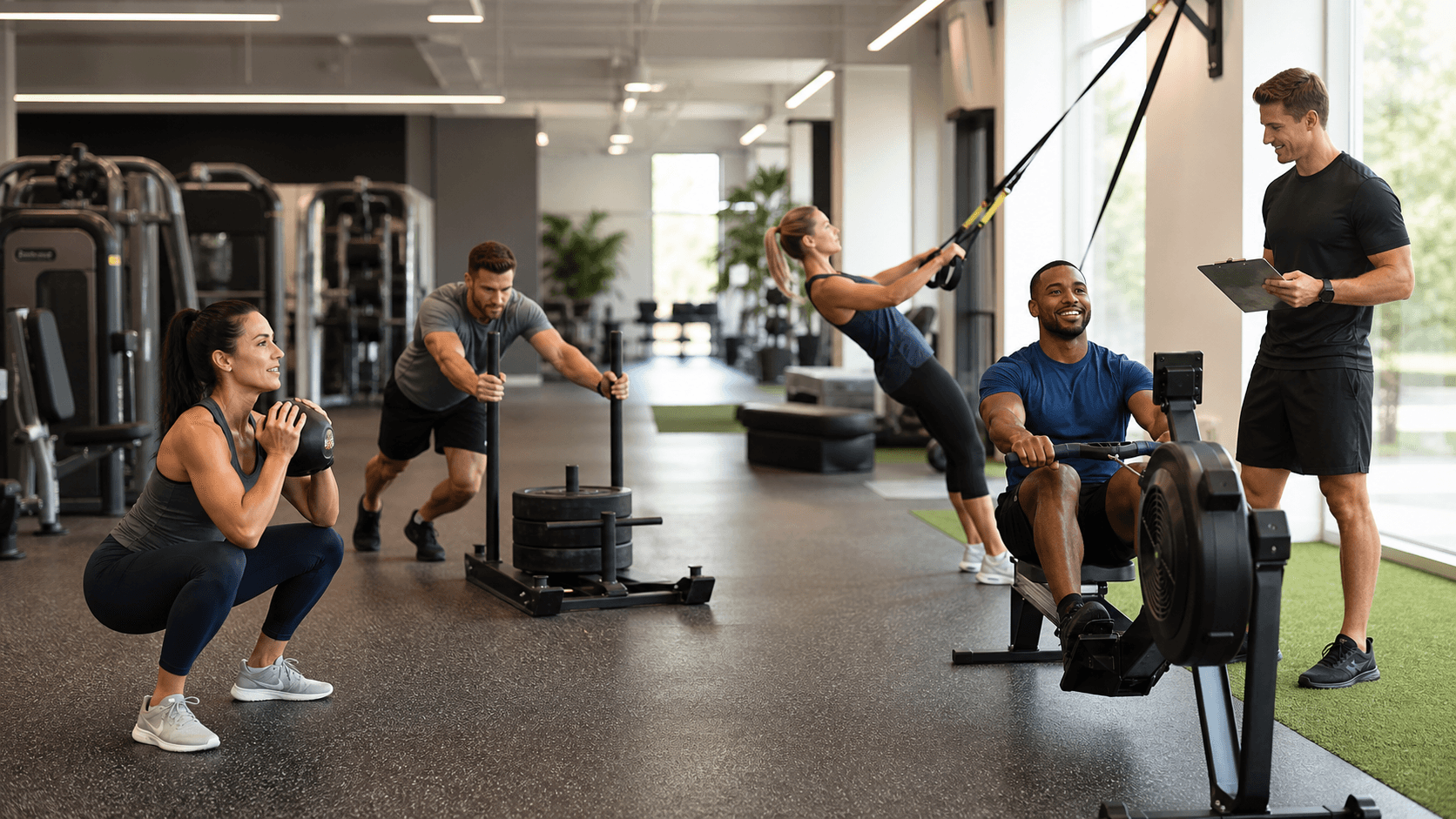
That is why many people are leaving big commercial gyms and moving to small group personal training. In a smaller setting you get better coaching, fewer distractions, real accountability, and personal attention without feeling like all eyes are on you. You get the support of a group, but the detail of individual coaching.
A great strength coach in a small group is not just there to count reps. Their job is to teach quality movement, adjust training to your body, and keep the space safe, calm, and motivating. What really separates a good coach from a great one comes down to three things: cueing, scaling, and progressions. When these are done well, strength training starts to feel like it truly fits you.
Why Coaching Cues Matter More Than Fancy Equipment
Cueing is the language of coaching. It is the short, clear instruction that helps your body do what your brain is trying to understand. The right cue can turn a confusing lift into something that suddenly feels simple and strong.
Good strength coaches use different types of cues so each person in the group can learn in the way that suits them best. That might look like:
- Verbal cues, like "push the floor away" in a squat or "zip your ribs down" in a plank
- Visual cues, like a quick demo, using a mirror, or lining you up with a marker on the floor
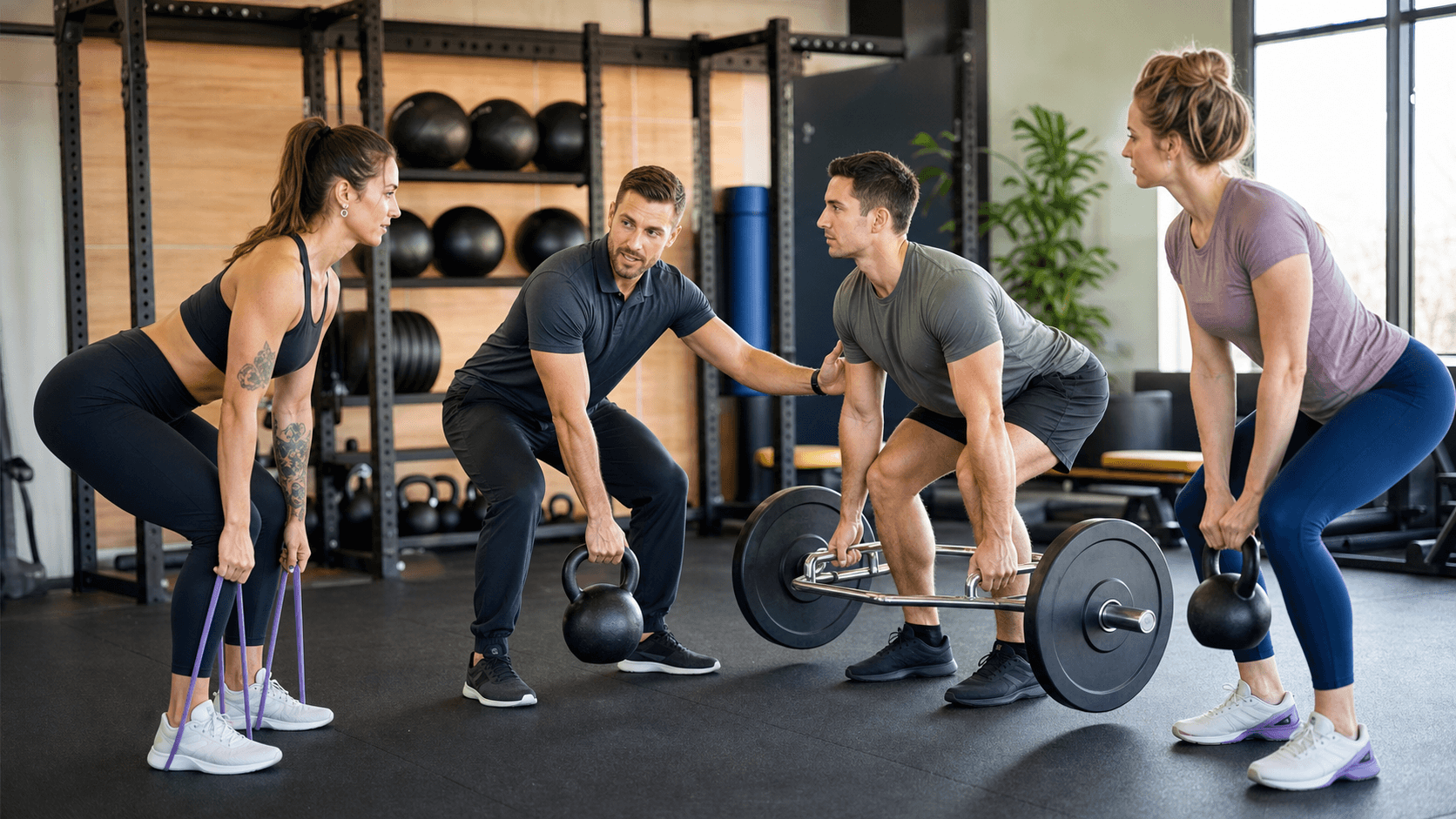
- Tactile cues, with your consent, like a light tap to remind you where to keep your ribs or knees
In a small group, cueing really comes to life. The coach can scan the room, spot small changes in form, and adjust you in real time. Instead of shouting generic tips, they can give you one simple phrase that lands at exactly the right moment.
This is where long-term results are built. When you move better, you can safely handle more load, build more strength, and train more often without feeling beaten up. Good cueing means fewer niggles, fewer flare-ups, and more sessions where your strength actually moves forward instead of staying stuck.
Smart Scaling so Every Level Feels Challenged, Not Crushed
Scaling means adjusting the workout so it fits your body, your experience, and your energy on that day. In small group PT, this is one of the biggest signs you are working with a great strength training personal trainer.
Before changing anything, a good coach pays attention to:
- Your past injuries and aches
- Your current mobility and confidence with each lift
- Your training age, meaning how long you have been lifting
- How you are feeling that day, including stress and sleep
Once they know what you need, they can change the session without changing the goal. Common ways a coach might scale include:
- Exercise variations, like using a goblet squat instead of a barbell back squat
- Adjusting load, sets, reps, or tempo to match your ability
- Swapping high-impact moves for lower impact options that are kinder on your joints
There is also an emotional side to scaling. Nobody wants to feel like the "unfit" person in the group. A great coach makes changes quietly and confidently so you feel supported, not singled out. The message is never "you cannot do this"; it is "here is the version that will make you stronger today". The result is a group where everyone finishes feeling challenged, proud, and ready to come back.
Progressions That Keep You Advancing All Year Long
Progressions are the planned path that keeps you improving over weeks and months. Instead of random workouts, a strong plan slowly increases the challenge as your strength, control, and confidence grow.
A good strength coach thinks far beyond today's set. They plan phases that move through strength, mobility, and energy systems so your body builds up instead of burning out. In small group PT, smart progressions might look like:
- Starting with basic patterns like hinge, squat, push, pull, and carry, then moving to more advanced versions
- Setting clear strength markers, such as a certain number of controlled reps before adding load
- Using lighter weeks or deloads so your joints and nervous system can recover and keep improving
The real point of progressions is not just bigger lifts in the gym. It is real-life strength. Things like:
- Carrying heavy shopping bags without needing a rest
- Getting up and down from the floor with ease
- Playing with kids or grandkids without worrying about your back
- Gardening, walking, or traveling with more energy and less stiffness
Done well, progressions help you stay consistent all year, not just during a short summer push.
The Human Side of Coaching: Trust, Detail, and Environment
Strong coaching is not only about exercises. It is also about how you feel in the space. In a relaxed, detail-driven gym, you can ask questions, try new movements, and get things wrong without any judgment. That is where real learning happens.
The best coaches listen as much as they speak. They pay attention to the whole picture of your life: sleep, work, family, stress, and confidence. Then they adjust the session so your training supports your lifestyle instead of draining it.
In a small group setting, those little check-ins really matter. A good coach will:
- Notice when you look tired and adjust the load
- Spot subtle shifts in form before they become a problem
- Celebrate small wins, like smoother range of motion or better balance
- Remind you of how far you have come when you forget
When coaching is contract-free and membership-free, like we offer at our private gym in Chalfont St Giles, the pressure is lower and the choice is yours. You come to train because you want to be there, not because you are tied in. That tends to build stronger, more honest relationships and better long-term results.
How to Choose the Right Strength Coach for Your Goals
When you visit or trial a small group session, pay attention to how the coach works, not just how the space looks. A simple checklist helps:
- Do they ask about your training history, injuries, and goals before they start loading you up?
- Do they explain why you are doing each exercise, not just bark orders?
- Do they offer clear cueing and easy changes when something does not feel right?
You can also ask a few direct questions, such as:
- "How do you scale exercises for different levels in the same session?"
- "What does progression look like over the next 3 to 6 months with you?"
- "How do you blend strength, mobility, and conditioning in your programs?"
If you are in Chalfont St Giles, Amersham, or nearby areas, look for UKSCA-led, detail-focused coaching that puts quality movement ahead of gimmicks. The right strength training personal trainer will make training feel safe, effective, and sustainable, so it becomes part of your lifestyle, not just a short-term project.
Build Lasting Strength With Expert Guidance Today
If you are ready to train with purpose instead of guessing your way through workouts, our strength training personal trainer services are designed for you. At GDN Fitness, we focus on practical, sustainable strength so you feel stronger in and out of the gym. Tell us about your goals, current routine, and any injuries, and we will map out a clear plan. Have questions or want to schedule your first session? Just contact us and we will help you get started.