Is Small Group Personal Training Really Right for You?
Small group personal training sounds simple, but choosing it over one-to-one can feel like a big step. You might be unsure if you are fit enough, worried you will be watched, or nervous that you will slow everyone else down. You might also wonder if it will be "serious" enough to give you the results you want.
Late summer often brings a natural reset. The kids go back to school, routines start again, and thoughts turn to how you want the next few months to feel. It can be a smart time to rethink how you train so you go into the darker, colder months feeling stronger, more mobile, and more in control of your health.
Small group personal training can be a gentle middle ground. With the right coaching style, group size and environment, it can feel less intimidating than a busy gym and more supportive than training alone. In a private studio like ours in Chalfont St Giles, the focus is on real people, real life and long-term progress.
In this guide, we will help you work out if small group personal training suits your personality, goals, schedule and confidence level so you can set a clear, realistic plan for the months ahead.
What Small Group Personal Training Actually Looks Like
A lot of people hear "group training" and think of loud bootcamps or crowded classes where everyone does the same thing. Small group personal training is different.
At its best, it looks more like this:
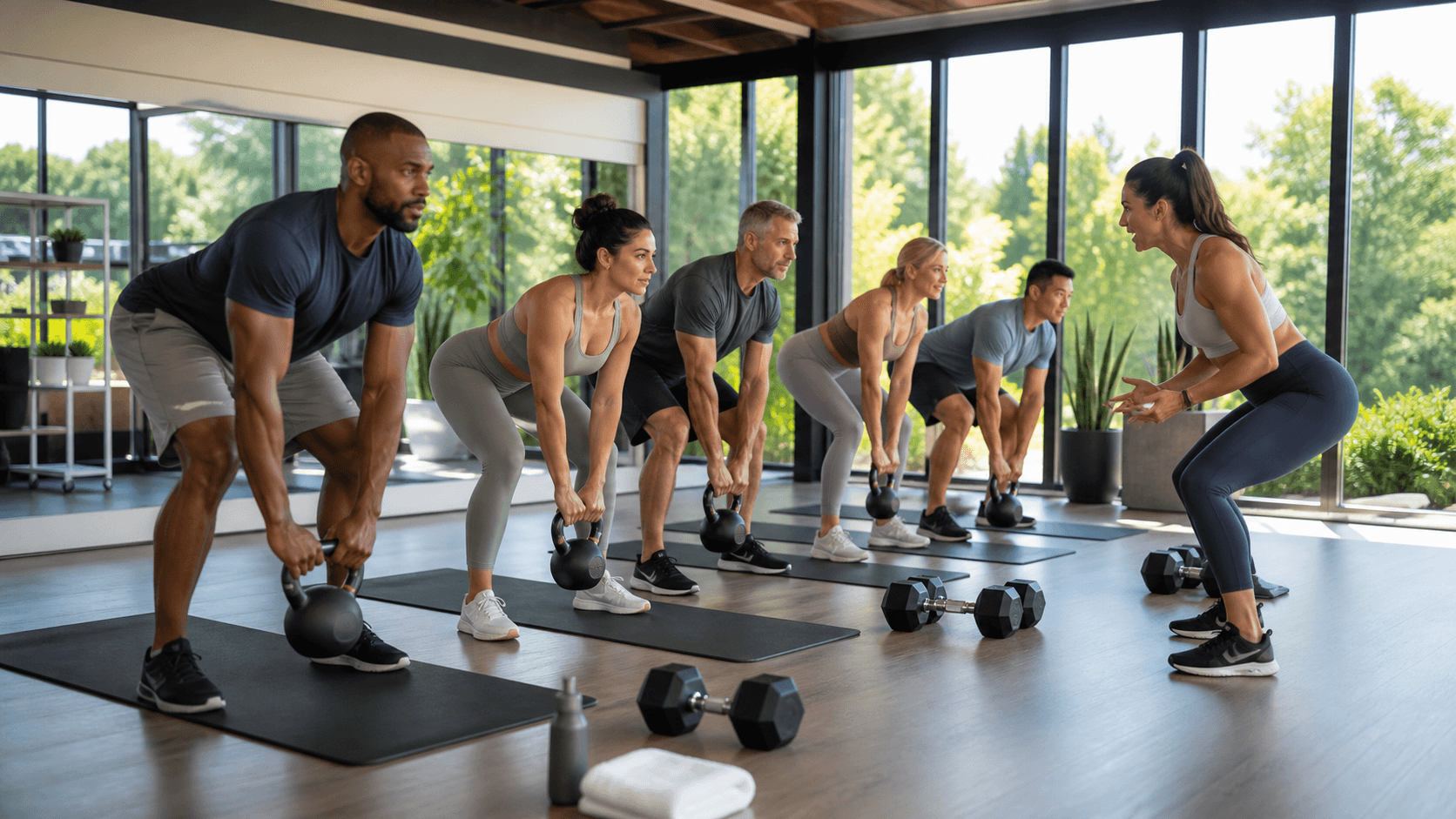
- Small numbers in each session, not a big crowd
- Everyone follows their own tailored programme
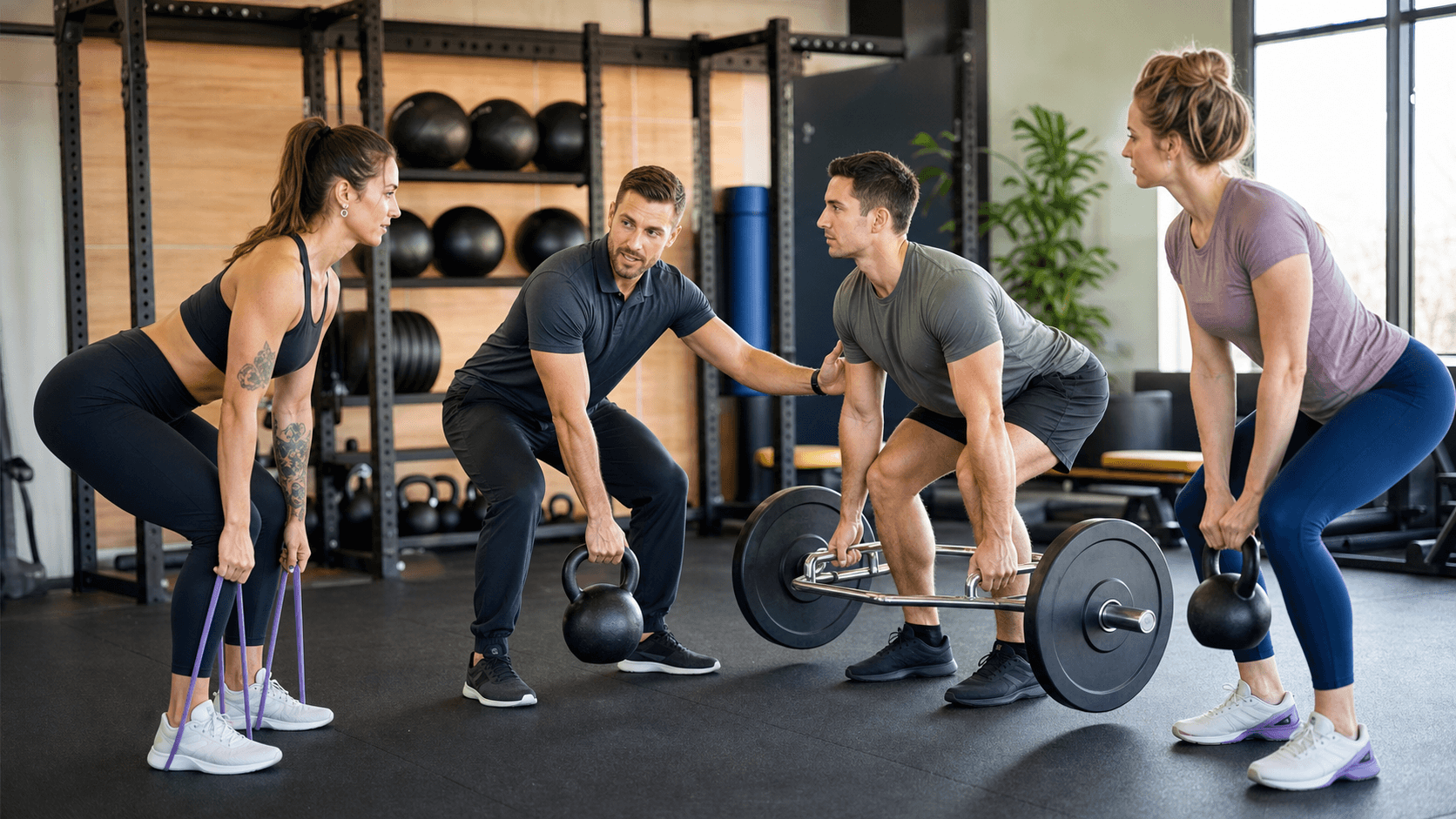
- A coach moves between you, giving cues, checking form and adjusting exercises
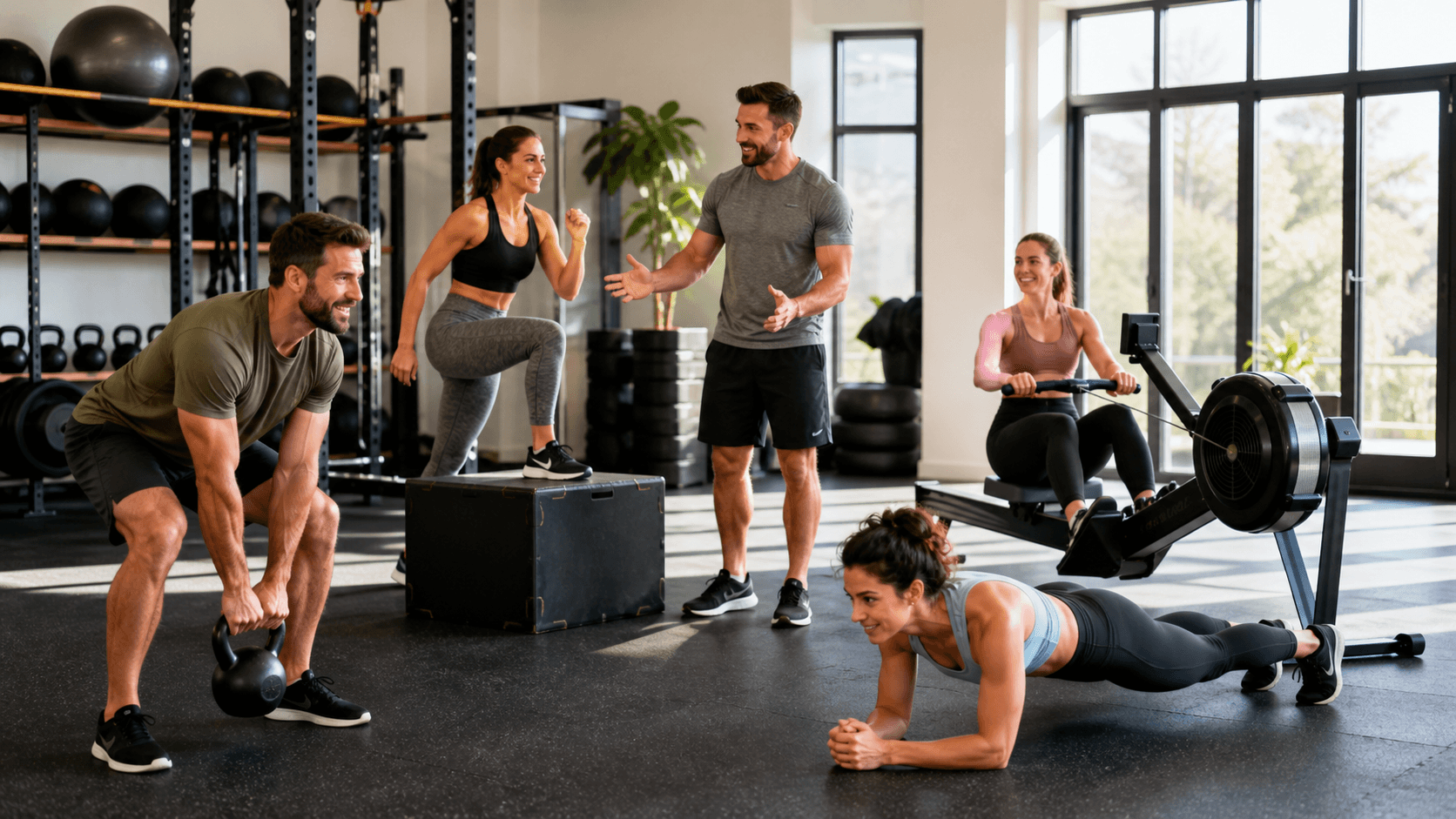
- The energy of training together, without the pressure of keeping up with a class
A typical session with us often follows a simple flow:
- Movement prep: Light mobility, activation and simple drills to get joints ready to move
- Strength and conditioning: Blocks of key lifts and conditioning work that match your plan and level
- Cool down: Easy stretching and breathing work so you leave feeling calm, not wrecked
This is not about extreme plans that only work for six weeks. Programmes are built around real life, like:
- School runs and after-school clubs
- Long work days or shift patterns
- Caring for family members
- Busy commutes and limited free time
The space matters too. In a relaxed, private gym, there is no "show-off" feel. You are not surrounded by mirrors or crowds of strangers. You can focus on learning good technique, getting feedback from your coach and noticing how your body is changing, instead of worrying what everyone else is doing.
Personality Check: Will You Thrive in a Small Group
The right training setup is about more than exercises, it is about who you are and what makes you feel safe and motivated.
If you feel self-conscious in big, high-intensity classes, a small group can be a softer option. You still get support and structure, but with far fewer people and more personal guidance. There is less pressure to perform and more space to move at your own pace.
Socially, it can suit many different types of people:
- If you are introverted, you get quiet support and routine without being the centre of attention
- If you like company, there is gentle chat, shared effort and light competition
- If you struggle to self-motivate, knowing others will notice when you skip can help you show up
Learning style matters too. Small group personal training works well if:
- You want real coaching, not just being left to guess what to do
- You like feedback on form and technique
- You do not feel you need a coach watching only you every second
Think about what pushes you to stay consistent. Are you more likely to train when:
- There is a set time in your diary?
- Other people expect to see you there?
- Your coach and training group can see your progress from week to week?
If you answered "yes" to most of those, you are likely to do well in a small group setting.
Matching Small Group PT to Your Goals and Lifestyle
As summer settles down, many people start to think about how they want to feel going into the busier months. Often the goals sound like:
- "I want to feel stronger and less achy."
- "I want more energy for the school term."
- "I want to move better and look after my joints."
Small group personal training fits especially well with goals like:
- Building strength and muscle tone
- Improving posture and movement quality
- Losing body fat at a steady, realistic pace
- Growing confidence around weights and equipment
- Building fitness for everyday life, not just for a short event
It is important to be clear on expectations. Small group PT is not a quick fix or a punishing shred. It is a structured, progressive approach that works best if you are ready to commit to regular sessions most weeks. Progress comes from:
- Turning up consistently
- Following a plan that suits your level
- Allowing time for your body to adapt
Scheduling is a big part of success. Fixed session times and limited group numbers encourage routine. Training somewhere local to you, like a studio in Chalfont St Giles if you live nearby, makes it easier to fit sessions around work, school and social plans even when life gets busy.
Pros and Cons: Is Small Group PT Better Than One-to-One
There is no single "best" way to train, but it helps to understand the trade-offs.
Key advantages of small group personal training include:
- Lower cost per session compared to one-to-one
- Extra accountability from training buddies
- A more relaxed, social feel that can make hard work feel lighter
- Enough tailored coaching to keep you safe and progressing
There are honest downsides too:
- Your coach will not be beside you every second
- You might occasionally wait a short time for a piece of kit
- You need to feel OK sharing space and attention with others
For many people, the extra enjoyment and consistency of small group PT actually leads to better long-term results than the odd one-to-one session. If you show up more often, move better and feel happy in the space, you are far more likely to stick with it.
One-to-one may still be a better fit if:
- You have very complex injuries or health issues
- You have highly specific performance targets
- Your schedule is so tight you need complete flexibility
A mix can work well too. Some people like mostly small group PT with the odd one-to-one top-up to focus on technique or a particular area.
How GDN Fitness Makes Small Group PT Feel Personal
At GDN Fitness, we design our small group personal training to feel as individual as possible inside a shared session.
It starts with an assessment process that usually includes:
- An initial chat about your lifestyle, history and goals
- Simple movement screening to see how you squat, hinge, push, pull and carry
- A clear plan for what you will work on over the coming months
From there, everyone has their own programme, even though they train alongside others. Coaches manage mixed abilities by:
- Giving progressions and regressions for each exercise
- Swapping movements if something does not suit your body
- Grouping people with similar needs and levels where possible
The coaching style is:
- Encouraging but honest
- Focused on form and understanding, not just sweating
- Aimed at building skills you can use in daily life, like lifting safely, moving with control and feeling confident in your body
Because we work in a calm, high quality studio and cap numbers, the space stays relaxed. People know each other by name. That sense of being recognised, rather than lost in a crowd, often makes all the difference when you are nervous about starting or returning to training.
As you think about how you want the next few months to feel, small group personal training could be a strong, sustainable option. If you want structure and support, are happy to share attention and value a calm, non-intimidating space, you will likely feel at home in this style of training.
Take The Next Step Toward Stronger, Fitter You
If you are ready to train with expert coaching, clear structure and real accountability, our small group personal training is the ideal place to begin. At GDN Fitness we keep group sizes deliberately small so you get tailored guidance without losing the motivation of training alongside others. Tell us about your goals and we will recommend the best starting point for your current level. If you have questions or want to book your first session, simply contact us and we will help you get started.