Build Stronger, Move Better, Live Easier
Functional strength is what makes life feel easier. It is what lets you carry the big food shop in one trip, take the stairs without thinking, or play on the floor with your kids and get back up without a groan. In a resistance training gym, it matters far more than chasing a random number on the bar.
As routines settle again after summer, many people head back to the gym and jump straight into heavy lifting. We prefer a different approach. We look first at how you move, then help you get stronger in a way that supports your joints, fits your lifestyle, and lasts.
In this guide, we will break down what functional strength really is, show you a few simple movement screens you can do yourself, and share smart exercise pairings that build strength and keep your body feeling good.
What Functional Strength Really Looks Like
Functional strength means you can move well in the main patterns your body uses every day. At its core, this is about:
- Squat: sitting down and standing up, getting off the sofa, using the loo
- Hip hinge: picking things up from the floor, lifting a suitcase, loading the car
- Push: pushing a door, doing press-ups, putting something on a high shelf
- Pull: opening heavy doors, rowing, pulling yourself up on a bar
- Lunge: climbing stairs, walking uphill, getting down to the floor
- Carry and brace: holding shopping, carrying kids, keeping your trunk solid
Gym strength is often about how much you can lift once. Functional strength is about how you control your body at different speeds and angles. Can you slow a movement down? Can you keep your balance? Can you move through a good range without things pinching or pulling?
At GDN Fitness, we use a simple rule: movement quality first, load second. That means we check:
- Posture: head, ribcage, pelvis, and feet in good positions
- Control: no rushing, wobbling, or jerking through reps
- Range: moving through as much comfortable motion as your joints allow
Once these are in a good place, then we start to build the weight in a steady, planned way.
Simple Movement Screens You Can Do in the Gym
You do not need fancy kit to spot how your body is moving. Here are a few easy checks you can try in any resistance training gym.
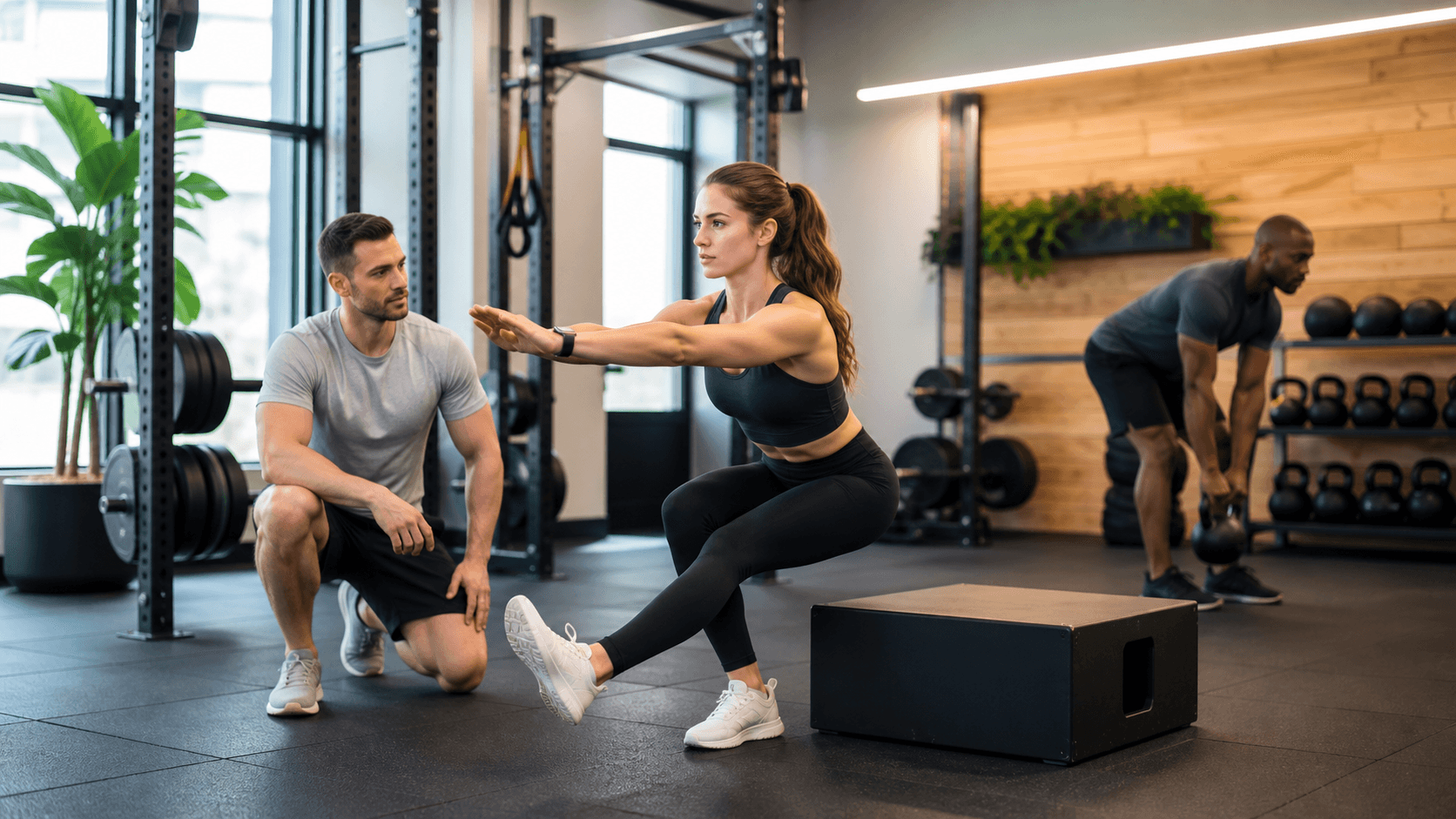
- Bodyweight squat to a box or bench
Sit back to a bench, tap it lightly, then stand up.
A good rep looks like:
- Feet flat, roughly shoulder-width
- Knees tracking in line with toes
- Chest up, not folding over your thighs
Common issues:
- Heels lifting, which may suggest tight ankles
- Knees collapsing in, which may point to weak hips or poor control
- Back rounding, which may show limited hip movement or poor bracing
- Hip hinge with a dowel along the spine
Hold a stick along your spine with three contact points: back of head, upper back, and tailbone. Push your hips back like you are closing a car door.
A good rep has:
- All three contact points staying in place
- Soft knees, not a deep squat
- Weight in mid-foot and heel, not toes
Common issues:
- Stick lifting off your lower back, often meaning too much rounding
- Knees driving forward instead of hips going back
- Feeling it only in your low back, not in your hamstrings and glutes
- Supported single-leg balance test
Stand tall, hold a rack or wall lightly with one hand, and lift one foot off the floor.
- Hips staying level
- Minimal wobble in the ankle
- Steady breathing, not holding your breath
If your hip drops on one side or your knee caves in, it might show that side is weaker or less stable.
- Press-up variation
Use the floor, a bar, or a box, wherever you can control good form.
Good form means:
- Hands under shoulders
- Body in a straight line from head to heel
- Elbows roughly 30 to 45 degrees from your sides
Common issues:
- Hips sagging, pointing to weak trunk bracing
- Elbows flaring wide, which can stress shoulders
- Head dropping, losing that straight line
- Dead hang or band-assisted hang
Hold a bar and let your body hang, feet either off the floor or lightly supported.
Watch for:
- Shoulders gently away from ears, not shrugging right up
- Grip feeling firm, not painful
- Ribs stacked over hips, not flaring up
If shoulders jump straight to your ears, your upper back may not be doing its fair share of work.
You can use a mirror or a quick phone video from the side and front. Keep it simple. These checks are not pass or fail. They are just a starting point. A coach can help you read what you see and decide what to work on first.
Smart Exercise Pairings to Fix What You Find
Once you have a sense of how you move, you can pair your main strength exercises with drills that help you improve that pattern. Think of it as fixing the wiring while you also build the engine.
Here are some useful pairings.
- Squat pairing
- A1: Goblet squat
- A2: Ankle dorsiflexion drill, like rocking your knee over your toes while keeping your heel down
Helps with: heels lifting, shallow depth, knees caving in.
- Hinge pairing
- B1: Romanian deadlift with dumbbells or bar
- B2: Hamstring stretch with core brace, focusing on keeping your ribs and pelvis stacked
Helps with: back rounding, not feeling your hamstrings, weight drifting to toes.
- Push pairing
- C1: Incline press-up on a bar or box
- C2: Band pull-apart, pulling the band to chest height and keeping ribs down
Helps with: shoulders shrugging, elbows flaring, poor shoulder blade control.
- Balance pairing
- D1: Split squat, front foot flat, back heel lifted
- D2: Supported single-leg hold on the front leg, lightly holding a rack for balance
Helps with: wobbling, hip dropping, knee drifting in.
You can build a simple session like this:
- Warm up: 5 to 10 minutes of light cardio and easy mobility
- Block A: A1 strength movement, A2 support drill, rest, repeat 3 to 4 rounds
- Block B: Same idea with a different pattern
- Finish: Short carry or core brace, like a suitcase carry or plank
This way, every set builds strength and also cleans up how you move.
Turning Screens Into a Progressive Strength Plan
To keep your progress on track, repeat your movement screens every 4 to 6 weeks. Do not obsess over numbers. Instead:
- More depth with the same control
- Less wobble or shifting side to side
- Easier breathing and less tension in your neck or face
- Feeling more confident in the movement
For busy adults, a simple plan can work very well:
- Two to three full-body sessions per week
- Each session 45 to 60 minutes
- One squat or lunge pattern, one hinge, one push, one pull, plus a carry or brace
Progress should be gradual. You can:
- Add a small amount of load when reps feel smooth
- Add a rep or a set if form stays solid
- Slow the tempo, for example 3 seconds down, pause, then up
- Increase range, for example a lower box on squats, if joints feel good
If your form starts to slip, you have found your limit for now. Stay there until the movement feels easy again before pushing on.
How GDN Fitness Makes Functional Strength Personal
At GDN Fitness in Chalfont St Giles, we take these ideas and make them fit your life. In our private resistance training gym, we use 1-to-1 assessments and small-group personal training to look closely at how you squat, hinge, push, pull, lunge, and carry. We then build a plan that respects your age, training history, job, and family demands.
You get coaching on technique, clear structure, and support on the days you feel tired or stressed. Autumn evenings can be dark and busy, so training in a calm, coached space helps you stay consistent without having to think about what to do next. Over time, this approach builds real functional strength: you feel stronger in the gym, but also steadier on the stairs, safer lifting at home, and more ready for whatever daily life throws at you.
Transform Your Strength With Expert-Led Resistance Training
If you are ready to build strength with structure and support, our resistance training gym provides tailored coaching in a focused, friendly setting. At GDN Fitness, we design programmes around your goals, your experience and your schedule so you can see steady progress without guesswork. To talk through what would suit you best or arrange your first visit, simply contact us today.