Train Hard Without Breaking Your Body
High-intensity workout classes feel great in the moment. Music is loud, heart rate is up, sweat is pouring, and it feels like you are doing something serious for your health. Then the next day your knees are aching, your hips feel tight, and your lower back is grumbling every time you sit down or stand up.
High intensity does not have to mean punishing your joints. True high-intensity is about how hard you are working compared with your own capacity. It is about effort level, heart rate, and how much useful work you get done in a short time, not about endless jumping on hard floors or rushing through sloppy circuits.
At GDN Fitness, we care about both sides of that equation. We want our members to get stronger, leaner, and fitter, but also to feel good walking out of the gym and still feel good years from now. Our UKSCA-qualified coaches design sessions that push you in the right ways while protecting the parts of you that often complain first, like knees, hips, back and shoulders.
In this article, we will show how you can enjoy high-energy training, keep your joints happy, and what to look for in a class or gym if you want results without constant aches and pains.
Why Joints Struggle in Typical High-Intensity Classes
Many busy commercial classes are built around the idea that harder must mean more impact and more chaos. That is where joints start to struggle. Common patterns include:
- High-impact plyometrics on hard floors, like jump squats and tuck jumps
- Fast circuits with no time to learn or keep good technique
- One-size-fits-all moves that do not match real-life bodies
When you mix those with cold muscles and stiff joints, things can feel rough. As the weather cools and the air gets damp, it is normal to feel a bit tighter. If a warm-up is rushed or skipped, your ankles, knees and hips are suddenly asked to work at full tilt before they are ready.
Everyday life also adds to the problem:
- Long hours at a desk, with hips and upper-back locked in place
- Old sports knocks that never quite got rehabbed
- Weak glutes and core that leave knees and lower back doing too much
- Tight ankles and hips that force the body to move in odd patterns
Put that body into a very generic HIIT format with lots of jumping and racing the clock and you get a mismatch. The exercise dose is higher than your current capacity, and technique drops as you chase the clock or try to keep up with the fittest person in the room.
Joint pain is not an automatic side effect of getting fit. It is usually feedback that something in the plan needs to change: the exercise choice, the speed, the range of motion or the total volume.
Smarter High-Intensity Training That Respects Your Joints
Intensity does not have to equal impact. You can train hard by being smart with programming. For us, that means:
- Controlling tempo, so movements are powerful but not reckless
- Using work and rest blocks that match your level
- Progressing weight and complexity step by step, not all at once
A big part of this is choosing joint-friendly exercises that still get your heart rate up. For example:
- Landmine presses or incline presses instead of heavy overhead thrusters
- Sled pushes and sled drags instead of endless jump squats
- Loaded carries, like farmer carries or suitcase carries, instead of burpees
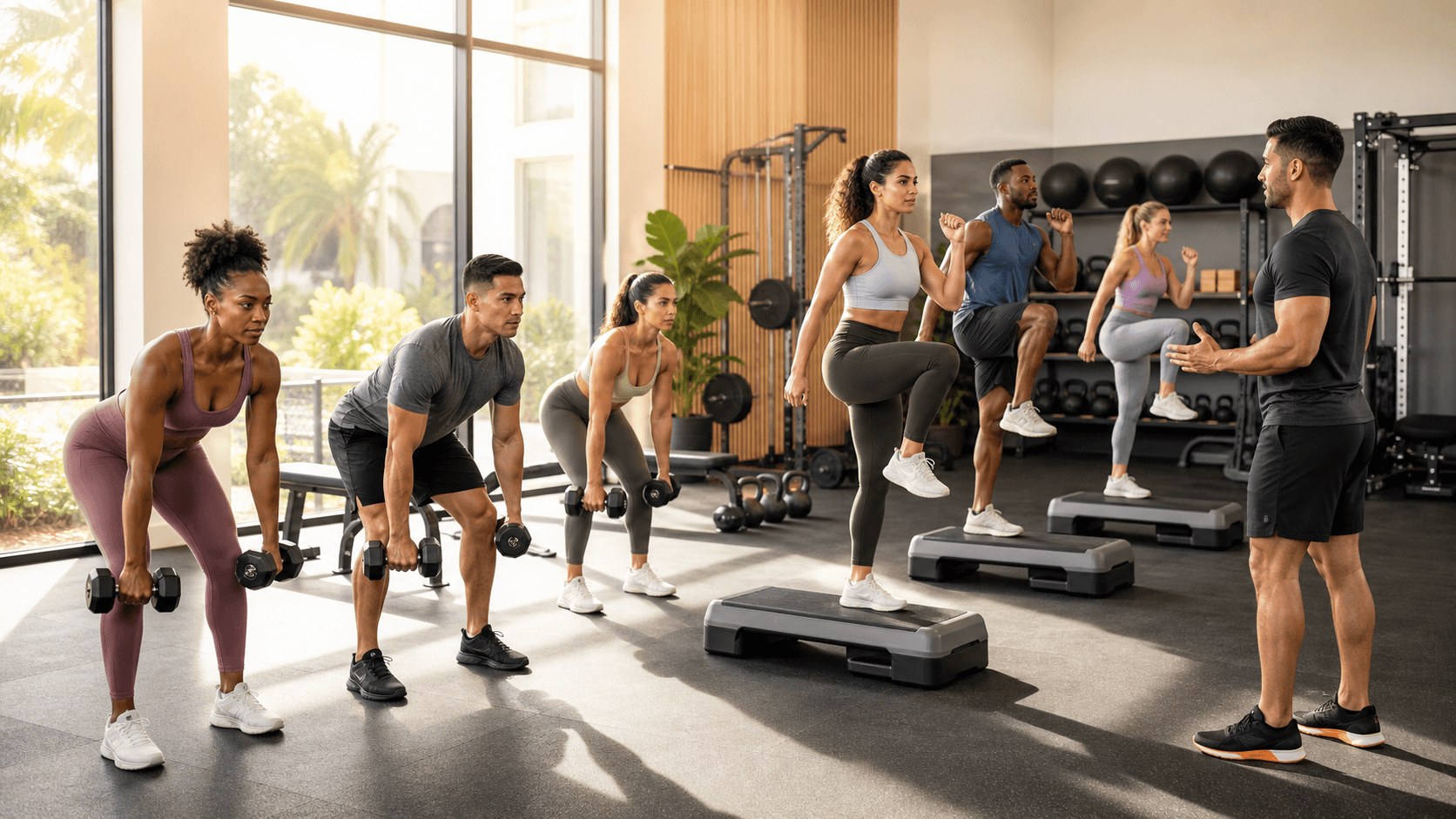
- Step-ups and split squats instead of deep, bouncy jump lunges
These still feel tough. You still breathe hard. You still get that satisfying sense of effort, just without smashing your joints into the floor over and over.
Warm ups also matter a lot, especially in colder months. A good joint-friendly warm-up will include:
- Dynamic mobility for ankles, hips, and shoulders
- Light activation work for glutes, core and upper back
- Rehearsal sets of the main lifts with very light weight
At GDN Fitness, our strength and conditioning focus means we think about building resilient joints first. Strong hips, stable shoulders and a solid core make high-intensity work feel powerful instead of painful. When the foundations are right, you can push harder with more confidence.
Small-Group PT for Safer High Intensity
Big crowded classes leave little room for coaching. The instructor might be full of energy, but with lots of people in the room it is hard to spot who needs a tweak, a slower pace, or a different exercise for their knees or shoulders.
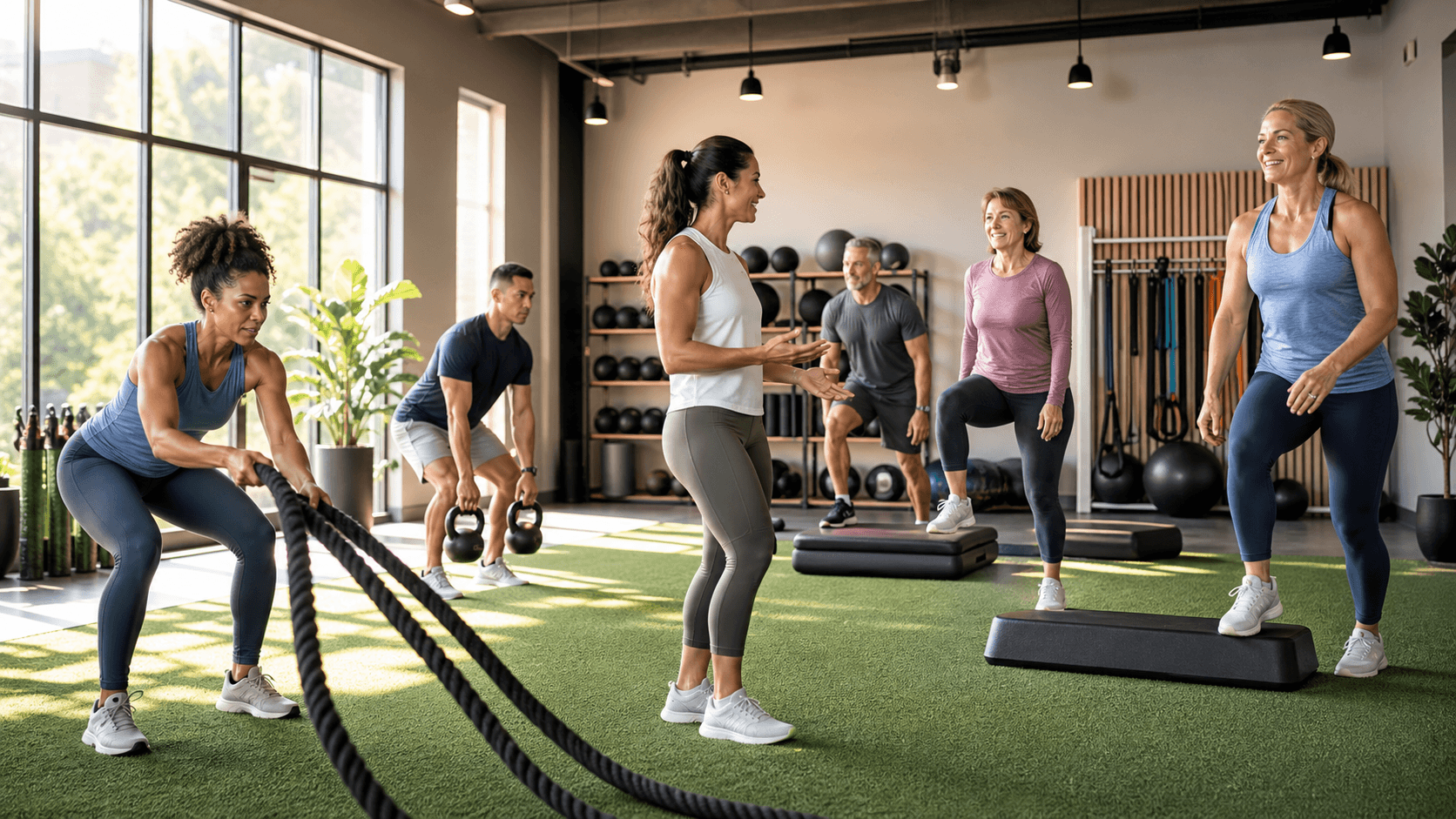
Small-group PT is different. Sessions are capped, so the coach can actually watch you. That gives space for:
- Adjusting movements on the spot to suit your joints
- Coaching technique in real time, not just shouting the next exercise
- Picking progressions that keep you safe as you get fitter
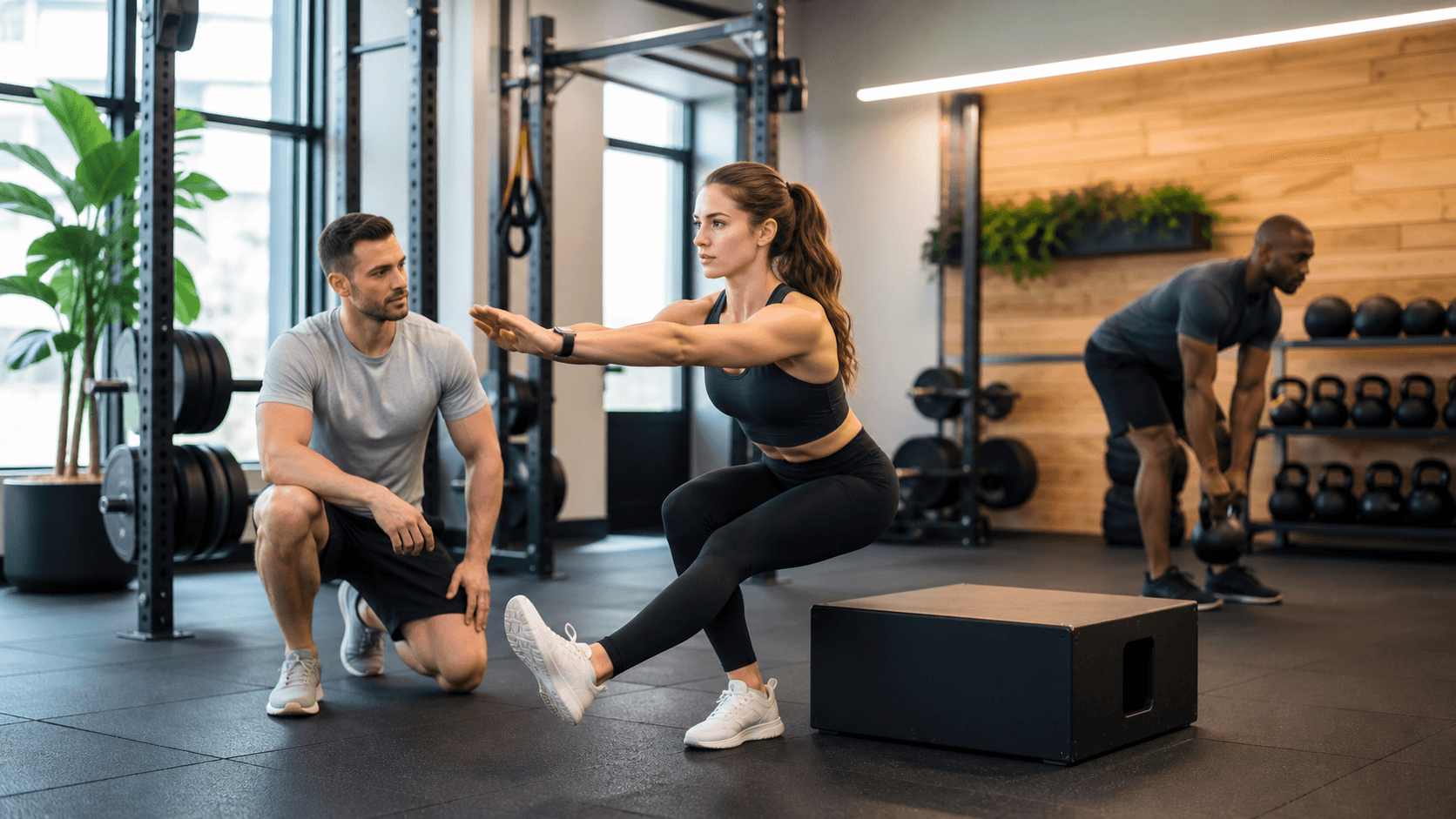
UKSCA-qualified coaches are trained to see how you move, not just what you move. They can spot things like knees caving in on squats, lower backs arching on overhead presses, or shoulders creeping up towards ears during pulls. Small corrections at the right time can keep little niggles from becoming real problems.
Training with a small group also gives you that class buzz, but with more control. You get:
- Training partners for motivation and a bit of friendly push
- A coach who sets your volume and intensity across the session
- Progressions that match your own pace instead of the loudest voice in the room
A joint-friendly high-intensity circuit at GDN Fitness might look like:
- A main strength lift, like a squat or deadlift, done with good form and enough rest
- Low-impact conditioning, like sled pushes, rowing, or bike intervals
- Core stability and upper back work to support posture and joint control
You still walk out feeling like you have worked hard, just without that sense that something is about to give way.
Building a Joint-Safe Plan for Autumn and Winter
High-intensity workout classes fit best into a balanced week. For most people, a good structure is:
- Two or three high-intensity strength and conditioning sessions
- Light walking or gentle cardio on other days
- Short mobility work, especially for hips, ankles and upper back
- Enough sleep so tissues can recover between sessions
Your joints also give you warning signs. Pay attention if you notice:
- Sharp pain in a joint during a movement, rather than a general muscle burn
- Swelling or heat that sticks around
- Pain that gets worse from session to session, not better as you warm up
Those are times to ease back, change the movement, or get coaching support instead of pushing through.
At home, small daily habits help a lot:
- Standing up and moving every hour if you work at a desk
- Simple mobility flows for hips, ankles and shoulders for a few minutes a day
- Basic strength drills with bands or bodyweight, like glute bridges, side planks and wall slides
Planning your training across the colder months also makes sense. Build your base of strength and joint control now, so that when life gets busier you are not starting from zero every time you walk into the gym.
Train Hard and Stay Pain-Free Long Term
You do not have to pick between tough, high-intensity workout classes and happy joints. With smart programming, careful exercise choice, solid warm ups and real coaching, you can get performance, fat loss and confidence gains while treating your knees, hips, back and shoulders with respect.
At GDN Fitness in Chalfont St Giles, we use small-group PT, strength and conditioning principles and UKSCA-qualified coaching to help people train hard in a way their bodies can handle for the long haul. When intensity is built on strong joints, good technique and the right progressions, your workouts feel challenging for the right reasons, and you can keep moving, lifting and living actively for years to come.
Transform Your Fitness With Focused, Results-Driven Training
If you are ready to train with purpose and see measurable progress, explore our high-intensity workout classes designed to challenge every level. At GDN Fitness, we structure each session to maximise your time, build strength and improve cardiovascular fitness safely. Speak to our team to find the right programme for you or ask any questions you may have via our contact page.