Train Together, Progress at Your Own Pace
Group fitness sessions can be a brilliant way to reset your routine, especially as summer winds down and life starts to feel a bit more structured again. The energy of a group helps you show up, work harder and enjoy training more than you might on your own. The sticking point is that not everyone in the room is at the same level, and that can put people off before they even start.
Some feel too unfit to join in, others feel like they are being held back. That is a real shame, because with the right plan and coaching, mixed ability training can work very well. You can share the same session, keep the social buzz and still feel like the workout is right for your body.
At GDN Fitness, our focus is on lifestyle and long-term wellbeing, not quick fixes. Our small-group set up in Chalfont St Giles is built so that different fitness levels can train together and still get personal attention. Below, we will walk through how mixed ability sessions can be safe, inclusive and genuinely effective for beginners and more advanced clients alike.
Why Mixed Ability Training Can Work Brilliantly
When people hear "mixed ability", they often think "problem". In reality, a room with different strengths, backgrounds and body types creates a richer training space. Someone might be strong at lifting but new to conditioning, another might move well but be unsure with weights. That variety helps everyone learn.
Training next to someone a little fitter or stronger can bring out your best. It is not about unhealthy comparison, it is about:
- Positive peer pressure to finish a set
- Role models for good technique and effort
- Shared accountability to keep showing up
The group effect is powerful. When others cheer you through a tough round, or celebrate you hitting a new weight, it is easier to keep training even when life gets busy or you feel a bit flat after holidays. You remember you are not doing this alone.
There are also big mental health and confidence benefits. Beginners see that strong people also have off days and that every body in the room is working on something. More advanced members often enjoy helping others, which gives more purpose to their own training. The key is that all this has to sit on top of smart programming and clear coaching, so no one is pushed into unsafe loads or risky movements.
Smart Programming for Every Level in the Room
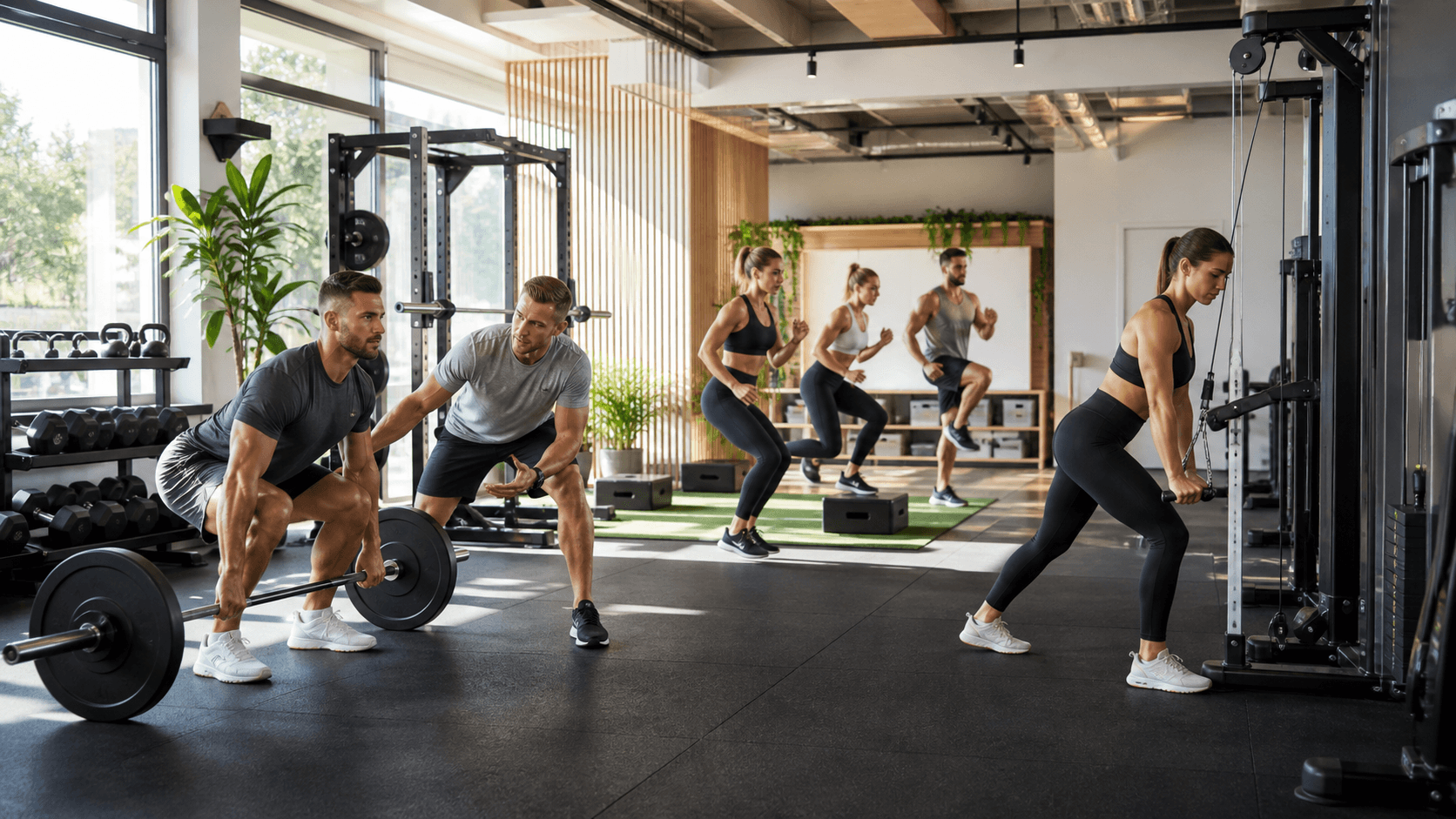
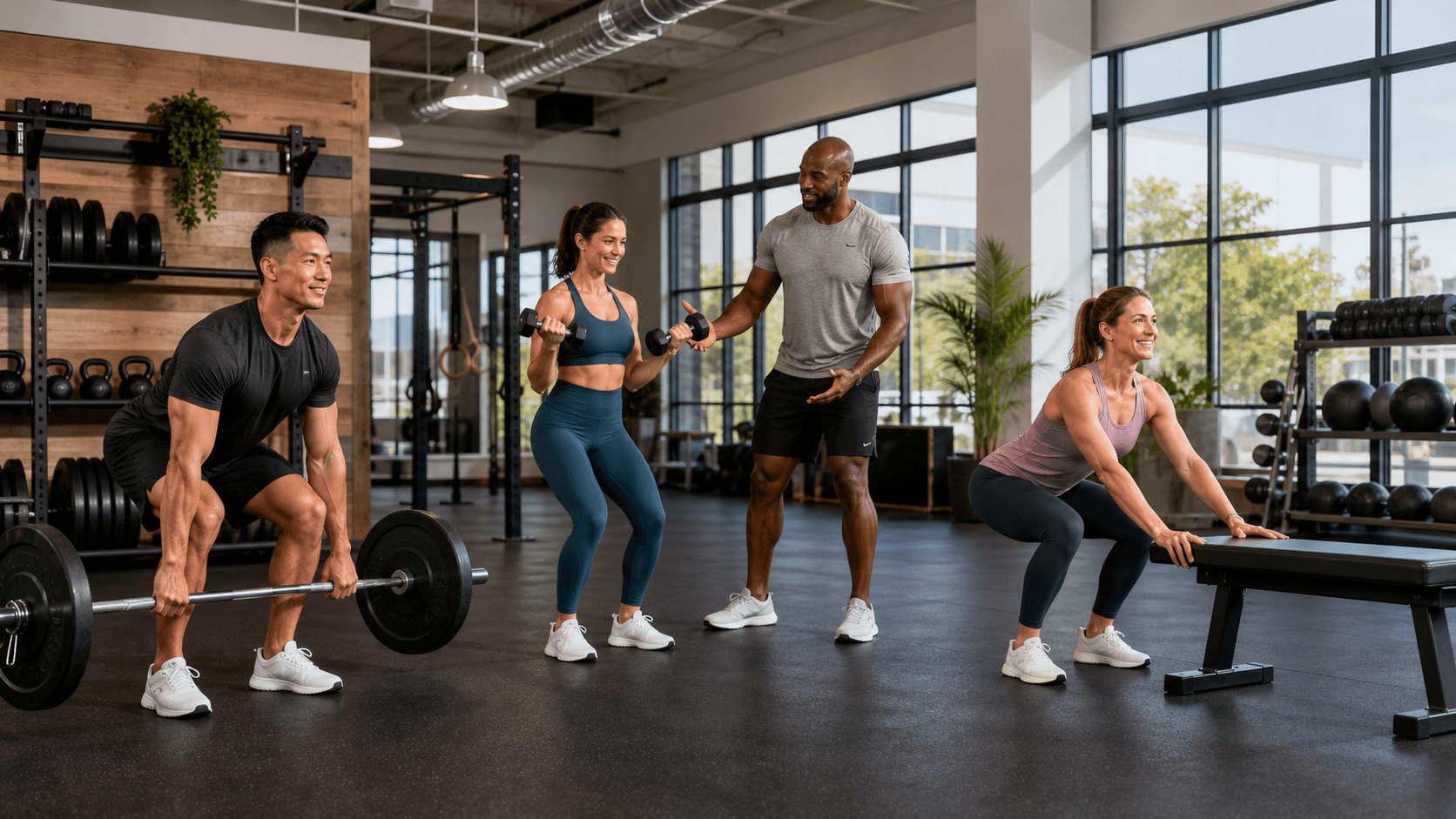
The secret to making mixed groups work is simple: same pattern, different level. Everyone might squat, hinge, push and pull, but how you do each move depends on your needs and experience.
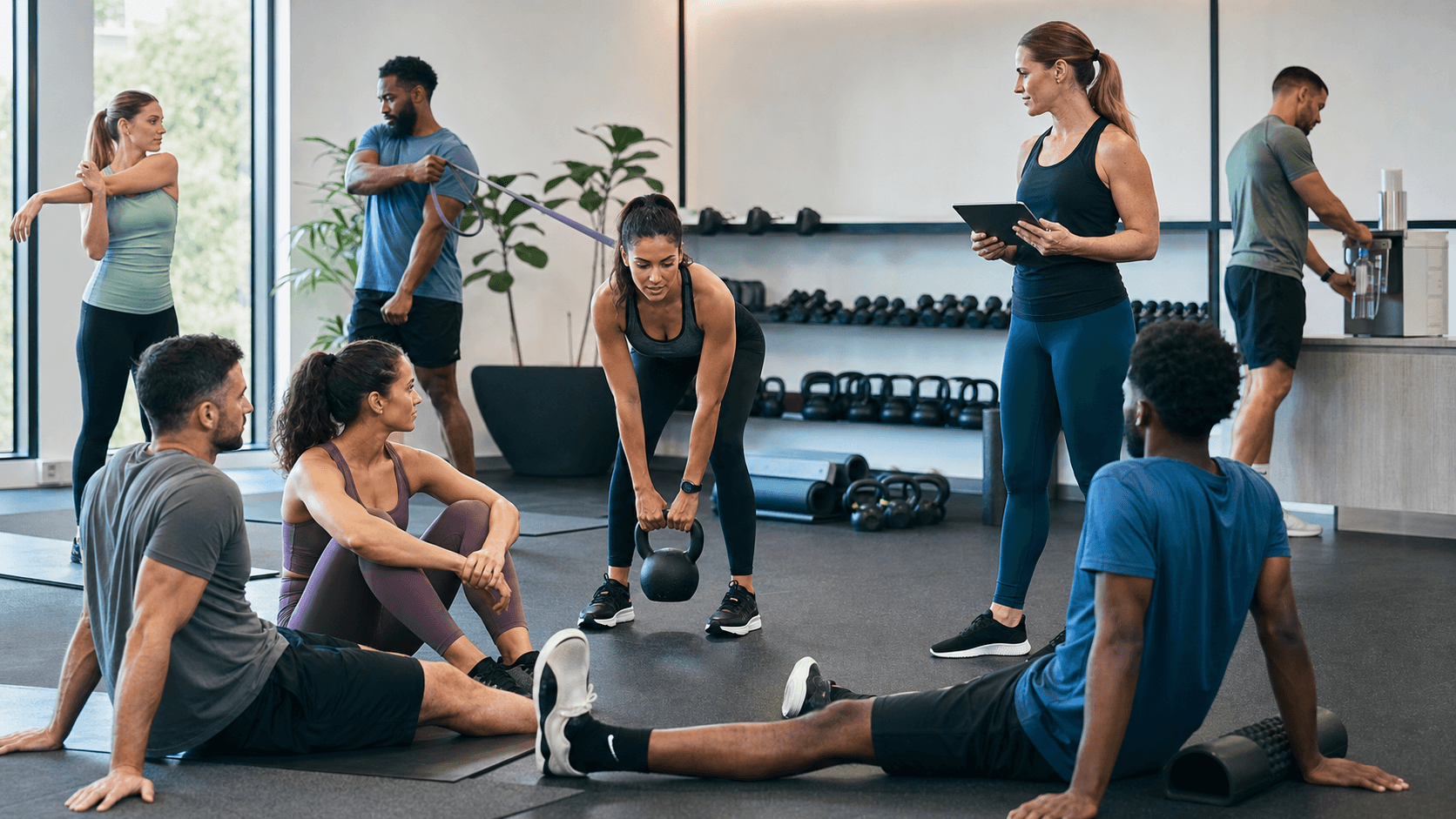
A coach can plan each session around clear blocks:
- Warm-up and movement prep
- Main strength work
- Conditioning or cardio block
- Cool-down and breathing
Within those blocks, there are built-in regressions and progressions. For example, in a squat pattern:
- Beginners might use bodyweight box squats
- Intermediates might use a goblet squat with a kettlebell or dumbbell
- Advanced lifters might back squat or use tempo, pausing at the bottom
The pattern is the same, the level is not. During conditioning, someone easing back after a break or managing a niggle might use a bike, sled or low-impact row while others do higher impact intervals. Everyone is training together, but the stress on each body is different.
Time-based sets are very helpful in mixed ability group fitness sessions. Instead of saying "everyone must do 12 reps", we might say "work for 40 seconds, rest for 20". This allows:
- Beginners to move slower and focus on technique
- Intermediates to work at a steady, solid pace
- Advanced clients to push intensity while still stopping on time
Keeping a similar structure week to week also helps. When people know roughly what to expect, they feel more confident. It is easier to see progress, and easier to slot back in after holidays or busy periods without feeling lost.
Coaching Techniques That Keep Everyone Safe and Challenged
Good programming is only half of the picture. Coaching on the gym floor is where mixed ability sessions come alive. The session should start with a clear explanation of the goal for the day, what muscles you are working and what options are available. This is also the time when the coach asks about sore spots, energy levels and any stiffness from travel or desk time.
During the session, a great coach is constantly moving, watching, and giving quick, specific cues. You might hear things like:
- "Advanced lifters, slow your lowering phase and keep tension"
- "Newer lifters, shorten your range a little and keep your chest up"
- "If your back is tight, swap to this variation instead"
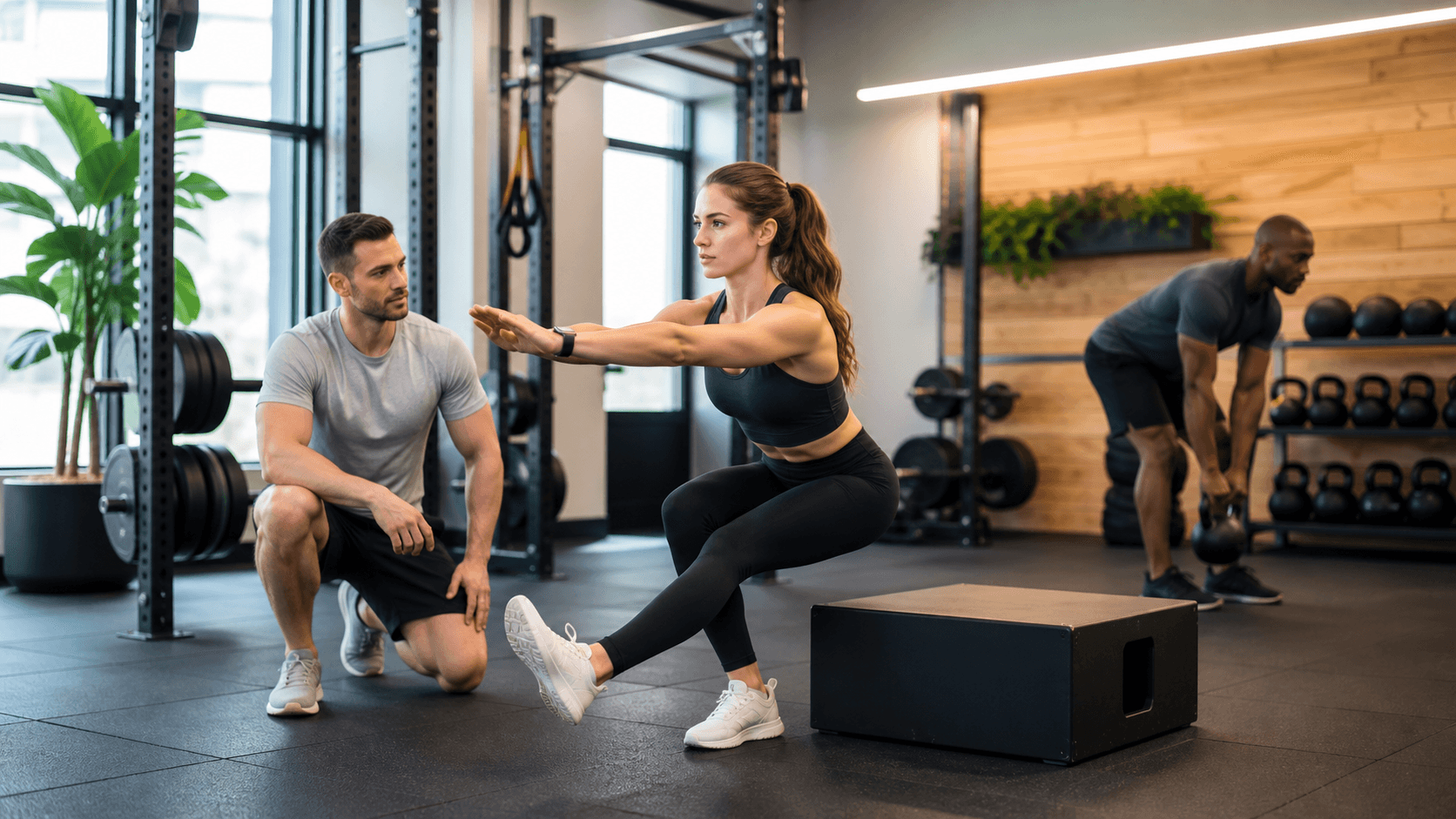
Setting "lanes" in the room can help. Newer or more cautious members might train closer to the coach for more frequent check-ins, while experienced clients have a bit more freedom but are still supervised. This does not create a hierarchy, it simply makes coaching easier to deliver.
Psychological safety matters just as much as physical safety. Modifications should be normal, not treated as second best. Coaches can praise smart choices like taking a lighter weight after time off, or switching to a lower impact option when a knee feels cranky. Inside the group workout, different people can have different micro goals, for example:
- Beginners focus on clean technique and smooth breathing
- Intermediate members focus on consistent effort across rounds
- Advanced members focus on heavier loads or strict tempo
Same session, different challenge, everyone progressing.
Making Group Fitness Sessions Feel Personal
For mixed ability sessions to really work, they need to feel personal, not generic. That starts before you even join the group. A short chat or assessment helps the coach learn your training history, any pain or injuries and what you actually want from your sessions.
Small group sizes mean the coach can keep track of who needs what. Over time, they learn:
- Your movement patterns and posture
- Which exercises feel great and which need tweaking
- Your weekly routine, stress levels and sleep patterns
Personalisation then shows up in small, practical ways. You might do fewer reps with a slower tempo, use a different resistance band, or swap an overhead press for a landmine press if your shoulders are tight. Someone else might be given a step count target between sessions or a reminder to focus on recovery walks after a heavy training day.
Many people worry they will be judged for using lighter weights or doing a different version of an exercise. In a well-run group, scaling is standard. It is not a sign of weakness, it is a sign that the plan is truly tailored. Alongside the training itself, good coaches can also weave in simple advice on sleep, stress and nutrition, so that as routines pick up again, your training still fits your life, not the other way around.
Turn Mixed Ability Into Your Training Superpower
Mixed ability group fitness sessions do not have to be messy or frustrating. With smart planning, clear coaching and a supportive culture, they become a powerful way for people at different levels to build strength, mobility and confidence side by side. Everyone shares the energy of the room, while still following a path that suits their own body.
It is worth asking yourself where you are right now. Are you holding back because you are worried about keeping up? Or are you coasting in sessions that are not quite challenging enough, because you are afraid to stand out? The right small-group set-up solves both problems by giving you the structure of a class with the attention of personal training.
At GDN Fitness, we design our small groups so you can join at your level and progress at your pace, whether you are new to strength work or have been training for years. Mixed ability is not something we try to hide, it is something we plan for, so the whole group moves forward together. However you are feeling this late summer, you do not need to wait for a "perfect" time or ability level. Start where you are, train with others, and let the right group help you do more than you thought you could.
Start Your Stronger, Fitter Routine Today
If you are ready to train with structure, support and accountability, our group fitness sessions are designed to help you move better, feel stronger and stay consistent. At GDN Fitness, we keep class sizes focused so you get proper coaching without losing the motivation of a team environment. Tell us about your goals and schedule and we will guide you to the options that fit best, or simply contact us to book your first session.